The Fog, The Mechanic, and The Ghost of the 90s
I. The Cloud Runner
It was a heavy, foggy morning today. The kind of fog that doesn’t just sit on the city but swallows it whole, erasing the edges of the world.

I went for a run early, before the sun had a chance to burn the gray away. The air was thick, almost gelatinous. I could feel the tiny droplets floating in the suspension, hitting my face like microscopic ghosts. It was quiet. The usual hum of Los Angeles traffic was muffled, wrapped in wet cotton.
Some might find this spooky, the setting for a horror movie where monsters with too many limbs descend from the mist. Others might find it suffocating. I am the latter—I find it calm. Comforting, even. Running in the heavy fog makes me feel like I am running inside a cloud. The path ahead is invisible until I am stepping on it. The path behind disappears the moment I leave it. There is only the immediate now, the rhythm of breath, the slap of shoes on damp pavement.
I couldn’t help but think that the crowd in the stock market is exactly like that when the correction called, fog hits the market.
Most people fear the lack of visibility. They want the bright, harsh sunlight of certainty. They panic when they can’t see the horizon. But there is a specific kind of runner who loves the fog. They understand that in the gray, the distractions vanish. You stop looking at the destination and start paying attention to the texture of the road. More than oftentimes, you can see better which stocks are to keep or lose in the fog season.
It’s a immensely heavy movie to talk about in the morning but…
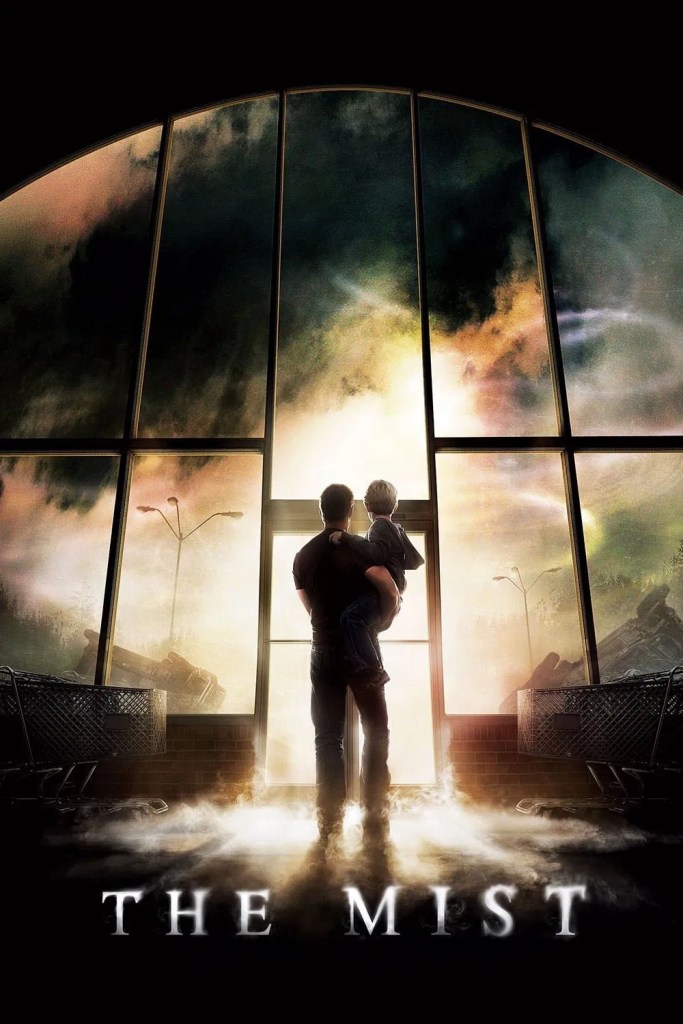
I was reminded of the ending of Frank Darabont’s movie, The Mist. Not the monsters, but that feeling of driving a car into the white unknown, the tank running low, the passengers terrified. The characters believe the world has ended because they can’t see it. They make drastic, tragic decisions based on the fear of the unseen. But if they had just waited—if they had just sat still in the car for a few more minutes—the mist would have cleared to reveal the army, the rescue, the continuation of life.
The market right now is full of people in that car. They see the fog of conflicting data—growth without inflation, cuts without recession—and they are terrified. They are ready to give up.
But if you roll down the window and listen, really listen, you can hear a sound cutting through the mist. It isn’t a monster. It is the hum of an engine we haven’t heard in thirty years.
II. The Ghost of the 90s
We are presented with a paradox that feels almost literary in its convenience: robust economic growth coupled with falling inflation. In the textbooks of the old world, these two do not dance together; when growth accelerates, prices usually catch fire.
But the thesis presented by the current administration, and echoed by the Fed’s recent maneuvers, is that the rules of gravity have been temporarily suspended by Productivity.
The argument is that Artificial Intelligence is doing for us what the internet did for Alan Greenspan in the 1990s. This is the “Ghost of the Nineties.” It is a “supply-side shock.” If a machine can do the work of ten men for the cost of a kilowatt-hour, prices naturally fall even as profits rise.
This is the sound in the mist. A world where we can have our cake, eat it, and still lose weight. It is a seductive narrative, but we must verify if the engine is real.
III. The Plumber, Not the God
There is a misunderstanding regarding the Federal Reserve’s recent actions. The market sees the Fed buying bonds and whispers “Stimulus.” They imagine the Fed as a rainmaker, summoning a deluge of liquidity to lift all boats.
However, a closer inspection reveals the Fed is acting not as a god, but as a nervous plumber.
The distinction lies in the piping. True Quantitative Easing (QE)—the “offensive” liquidity of 2020—involves buying long-term debt to force money into risky corners of the world. What is happening now is the purchasing of short-term bills to manage bank reserves. It is a technical adjustment, a “calibration of depth.”
Imagine a diver descending into the abyss. In 2019, the Fed dove too deep, draining too much liquidity, and the diver (the Repo market) blacked out. They are terrified of that darkness. The current bond buying is simply the Fed checking the oxygen tank and ascending a few meters to ensure the diver doesn’t drown. It is maintenance, not magic.
IV. Strategic Analysis: The Barbell in the Mist
So, how do we run in this fog? We can’t see the finish line, but we know the terrain. We adopt a “Barbell Strategy.”
1. Side A: The Efficiency Monopoly (Aggressive)
We bet on the engine. If the “Productivity Thesis” is real—if the fog is hiding a boom and not a cliff—then the winners will be the companies creating the deflationary shock. These are the AI infrastructure plays, the nuclear power providers, and the dominant software platforms. They win because they are the source of the efficiency the Fed is betting on.
2. Side B: The Cash Fortress (Defensive)
We respect the lack of visibility. We do not buy mediocre companies hoping for a bailout, because the Fed is only doing maintenance, not stimulus. We hold short-term Treasuries and high-grade corporate bonds. We use the Fed’s “plumbing repair” to earn safe yield. If the productivity thesis fails—if the mist clears to reveal a recession—this side of the portfolio keeps us alive.
V. Conclusion: Waiting for the Army
By the time I finished my run this morning, the sun started peaking. The fog didn’t vanish all at once; it retreated in patches, revealing a street sign here, a palm tree there.
The “Civil War” at the Fed tells us that even the people driving the car don’t know exactly where the road goes. They are arguing over the map while the windshield is covered in condensation.
But we are not the passengers in The Mist. We do not need to make a tragic, final decision based on fear. We can afford to keep running at a steady pace. We bet on the efficiency of the machine, but we keep our life vests on. We listen to the mechanic working on the engine, distinguishing the sound of repair from the sound of acceleration.
The fog is not the end of the world. It is just a cloud that came down to earth to touch us for a while. Keep moving. The road is still there.
Disclaimer: The visibility is zero, but the gravity is constant. This is not financial advice, just a map drawn on a foggy window. Do your own research.
 What I Talk About When I Talk About Money
Leave a comment