The Capacity Gap: A Personal Realization
My children are officially outrunning me.
As they grow, their energy isn’t just increasing; it’s accelerating. They want to play longer, run faster, and push further. For a while, I struggled to keep pace. I had settled into a comfortable routine, neglecting my own “power plant” until the physical demands of my kids’ growth forced a reckoning. I realized that having enough energy isn’t a luxury—it is the fundamental requirement for participating in the life I want to lead.
This personal friction—the gap between what is demanded and what can be supplied—is the exact crisis currently facing the global economy.
Just as my children have shifted into a new gear of activity, Artificial Intelligence has entered an explosive stage of development. We are still in the “early childhood” of AI, yet its appetite for power is already staggering. While the world was comfortably settling into existing energy patterns, AI arrived with a thunderous demand: “GIVE ME MORE ENERGY!” Our current infrastructure, much like my fitness level a few months ago, simply wasn’t prepared for this level of consumption.
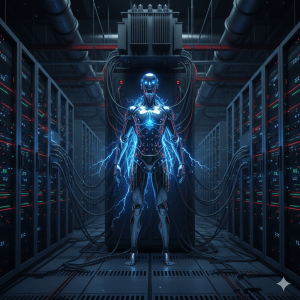
1. AI as a Physical Energy Factory
AI is no longer just a digital tool; it is a massive physical consumer of power.
- Massive Infrastructure: Upcoming AI data centers (expected by 2026) will consume power on the scale of entire small cities.
- The Cost of Interaction: Every AI-generated response, image, or video requires a significant burst of energy from power plants.
- Global Demand Shock: If global AI usage continues to scale toward 24/7 adoption by billions of people, current power grids will face an inevitable “Energy Shock.”
2. The Paradox of Efficiency (Jevons Paradox)
A common misconception is that better technology reduces energy use. In the AI sector, the opposite is true:
- Increased Frequency: As AI chips become more efficient and costs drop, people use AI for more frequent and smaller tasks.
- Exponential Growth: While individual chips use less power per task, the total global consumption is exploding because the technology is being adopted everywhere at once.
3. Infrastructure Bottlenecks & “Super Providers”
The primary hurdle isn’t just generating power; it’s delivering it.
- Outdated Grids: The infrastructure required to move electricity to data centers (transformers and power lines) is aging and insufficient.
- Supply Chain Delays: Sourcing critical grid components can take years, creating a major bottleneck for AI expansion.
- The Rise of “Super Caps”: Companies that control the power grid or offer stable electricity now hold immense pricing power.
Conclusion: The Playground of the Future
Back on the home front, my “infrastructure project” is ongoing. I’m back in running (or at least I’ve been trying), trading my sedentary habits for stamina, all so I don’t have to call a “timeout” five minutes into a game of tag. It’s a work in progress—some days I feel like a high-tech turbine, and other days I feel like a 19th-century coal plant with a literal “exhaust” problem.
There is a certain hope in this: just as I am capable of rebuilding my own capacity to meet my kids’ demands, the world is capable of rebuilding the grid. We are seeing a historic reinvestment in nuclear, fusion, and smart-grid tech that could lead to a golden age of abundance.
However, there is a touch of concern. My kids don’t care about my five-year fitness plan; they want to play now. Similarly, AI development isn’t waiting for the utility companies to finish their environmental impact studies or for the supply chain to deliver more transformers. We are currently in the “toddler tantrum” phase of AI energy demand—where the need is immediate, loud, and non-negotiable. If we don’t bridge this capacity gap soon, the “playtime” of digital innovation might face some very dark, very literal, outages.
The Final Thesis: In the economy of 2026 and beyond, the “Golden Goose” is AI, but the most valuable asset is the “feed.” While others chase the flashiest software, the smart investor looks to the source. Energy is no longer just a utility; it is the fundamental currency of the modern world. Those who control the flow of electrons will hold the keys to the kingdom.
Disclaimer: This report is for informational purposes only and does not constitute financial, investment, legal, or tax advice. The “Energy—The True Currency” report reflects the analytical views of the authors as of January 2026 and is subject to change without notice. Investing in AI infrastructure and energy sectors involves significant risk, including the potential loss of principal. Past performance of energy stocks or tech utilities is not indicative of future results. Readers should consult with a qualified financial advisor before making any investment decisions. The authors may hold positions in the securities or sectors mentioned herein.
 What I Talk About When I Talk About Money
Leave a comment