• The Tramp’s Shoes

    One of the silly, cute things my kids do these days is walking in daddy or mommy’s shoes. I hear them before I see them—the slap-slap-slap of leather soles hitting the hardwood, a rhythm too slow and heavy for a Thursday evening.

    They walk like penguins, knees locked, arms out for balance, drowning in the empty space of the heels. More often than not, they fall down. A soft thud, followed by the specific, breathless silence that precedes either tears or laughter. Tonight, it was laughter.

    “You got big shoes to fill,” I said, repeating the old saying like a worn-out cassette tape. They don’t understand what it means yet.

    But as I watched them stumble, the laughter felt thin. I looked at the shoes—dark, hollow things resting by the door. They looked like small boats waiting for a tide that might never come. It struck me then that “filling shoes” isn’t about growing feet. It’s about inheriting the weight of the steps taken before you. It’s about walking into a room where everyone expects you to know the dance, but the music is something you’ve never heard.
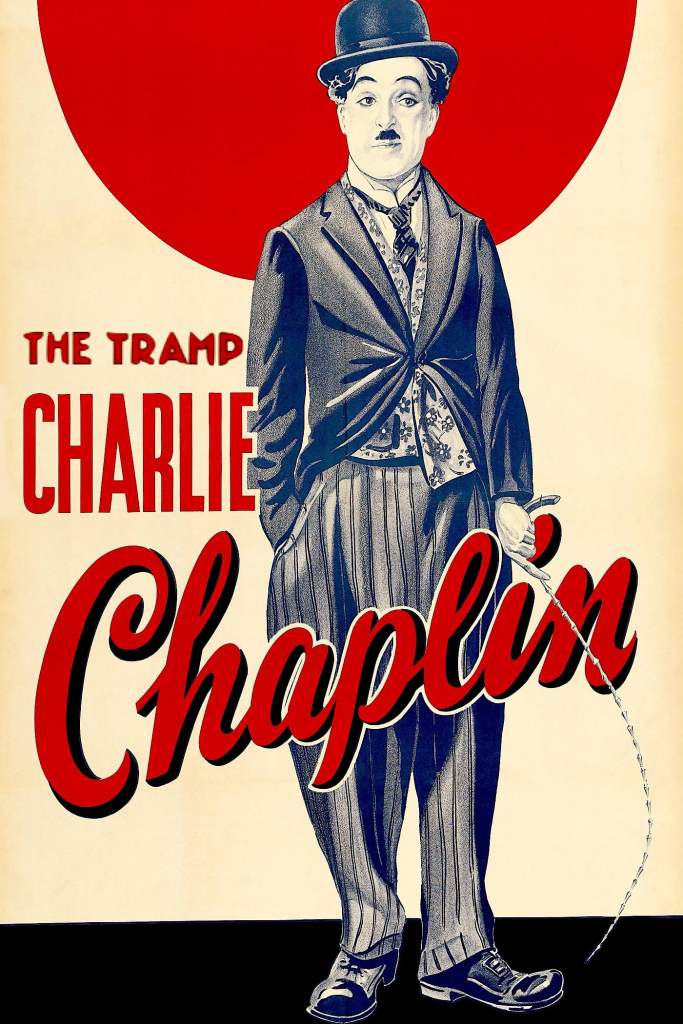
    It reminded me of The Tramp—Charlie Chaplin’s eternal wanderer. He always wore shoes that were too big and trousers that were too baggy. He was a man trying to fit into a world that had no precise shape for him. He stumbled, he slid, he fell with a grace that made the falling look like flying. He understood that the only way to survive the crushing machinery of the modern world was to treat the oversized shoes not as a burden, but as a prop for a comedy he was writing in real-time.

    Today, the stock market felt exactly like that. A clumsy giant trying to walk in shoes that suddenly felt two sizes too big.

    1. The Stumble of the Oracle

    I watched the screen as the sun went down. The numbers were red, blinking like tired eyes.

    Oracle ($ORCL) was the first to trip. It fell 10.8% today, closing below $200. Yesterday, it was the king of the cloud; today, it was just a company spending $50 billion on data centers that haven’t paid off yet. The market looked at Oracle’s massive capital expenditure and whispered, “Are you sure you can fill those shoes?” The answer, for today, was a resounding no. The “AI Bubble” fear is back, colder and sharper than before.

    2. The Broadcom Pivot

    Then, after the closing bell, Broadcom ($AVGO) stepped onto the stage.

    They reported earnings that were supposed to save the day. And in a way, they did.

    • Revenue: $18.02 billion (up 28% year-over-year).
    • EPS: $1.74 (beating expectations).
    • AI Revenue: Up 74%, driven by custom chips for the hyperscalers.

    But the stock fell ~2% in after-hours trading. Why? Because the shoes are getting bigger. The market doesn’t just want growth; it wants perfection. Even a beat feels like a stumble when the expectations are set by the gods. Broadcom is doing the heavy lifting—building the roads for the AI future—but the toll collectors are getting impatient.

    3. The Quiet Inflation

    I checked the PPI (Producer Price Index) data for November. It came in slightly hotter than expected, a reminder that inflation is a ghost that haunts the house even after you’ve exorcised it. The Fed cut rates yesterday, trying to grease the wheels, but the machine is still grinding.

    4. The Yoga Pose

    Lululemon ($LULU) also reported. They beat earnings ($2.59 EPS vs $2.22 expected), but the CEO is stepping down. The stock popped, then wavered. Another transition. Another pair of shoes left empty, waiting for someone new to step in and try not to trip.

    Conclusion

    I picked up my shoes from the hallway and placed them on the rack. They looked smaller now, just leather and rubber, stripped of the metaphor.

    The market will open again tomorrow. Oracle will try to stand up. Broadcom will try to explain that 28% growth is actually good. We will all put on our shoes, whether they fit or not, and do the penguin walk into the future.

    As Chaplin taught us, the trick isn’t to stop falling. The trick is to stand up and tip your hat as if the fall was part of the act all along.

    It’s been a long day but a good day. Must go to bed for the 5am run.


    Disclaimer: I am not a financial advisor. I am just a man watching the shadows lengthen in the City of Angels. Do your own research.

  • The Oracle’s Silence and the 5 AM Sky

    I am out of shape.

    I have been repeating this phrase for months, rolling it around in my mouth like a smooth, tasteless stone.

    Watching my wife wake up at 4:00 AM for her online class—moving through the dark house with the silent precision of a cat—finally broke something in me. I challenged myself. I set the alarm for 5:00 AM.

    And I ran.

    It has been more than a year since I last ran for the sake of running. I didn’t sprint. I didn’t push for a personal best. I just needed to start. It was only fifteen minutes, a short loop around the sleeping neighborhood, but it changed the color of the morning.

    My usual mornings are foggy. A “groggy coffee zombie” routine. There is usually a sense of a chaotic, directionless scrambling, like leaves caught in a sudden gust. Rushing to make breakfast, shouting about lost socks, the mental static of the day beginning before I am ready.

    But today, there was none of that. The run cleared the static. The breakfast was made in silence. The kids were ready without the usual friction.

    Even though I knew, theoretically, that discipline creates freedom, I had been pushing it away with flimsy excuses. R U N !

    As I cooled down, watching the grey sky turn a pale, bruised purple over the rooftops, a question hit me. What will I think when I am 80 and look back at this moment?

    It’s the same way I look back at my 20s now—with a gentle, aching frustration at how much time I wasted on things that evaporated as soon as I touched them. Consumptive, meaningless things. I already knew the answer. The only thing that stays is what you build. The body, the mind, the routine.

    The Shadow of the Trees

    It reminded me of Hirayama, the protagonist in Wim Wenders’ film Perfect Days (2023).

    Hirayama cleans toilets in Tokyo. His life is a loop of repetition. He wakes up to the sound of a broom sweeping the street. He waters his plants. He buys a canned coffee from the vending machine. He listens to cassette tapes.

    There is a scene where he simply looks up at the sunlight filtering through the trees—komorebi. He takes a photo of it. It is a moment that will never happen again in exactly the same way. He doesn’t rush. He doesn’t panic about the future. He exists fully in the ritual of his day. His dignity comes not from his status, but from his discipline.

    The market, in contrast, has no discipline. It is all the chaos you want. It runs around in confusion, terrified of the future, regretting the past.

    Today, the market woke up with a hangover.

    1. The Oracle’s Reality Check

    While I was finding clarity in my morning run, Oracle ($ORCL) was stumbling in the dark. The stock is down 14% this morning.

    Why? Because the “AI Dream” hit the wall of accounting physics. Oracle missed its revenue targets. More worryingly, they raised their capital expenditure guidance to $50 billion for 2026. They are spending money faster than they are making it, building massive data centers for a future that hasn’t fully arrived yet.

    It is the classic fear: Are we building empty castles? The market looked at Oracle’s bill and flinched. The “AI Bubble” narrative is whispering again, louder this time.

    2. The Fed’s Soft Whisper

    But beneath the noise of the tech sell-off, there was a quieter, more important signal.

    Yesterday, Federal Reserve Chair Jerome Powell played the role of the benevolent gardener. He cut rates, yes, but more importantly, he admitted the truth: the labor market is weaker than it looks.

    And today, the data proved him right. Initial Jobless Claims jumped to 236,000, the highest level since the pandemic panic of 2020. The cracks are visible.

    To fix this, the Fed initiated a “Reserve Management Buyback”—a technical term for “we are going to pump cash into the system starting tomorrow.” They are watering the plants before they wither. This liquidity is why the 10-Year Treasury yield dropped to 4.11%. The safety net is there, even if Oracle is falling off the tightrope.

    3. The Mouse and the Machine

    In the entertainment corner, a strange dance is happening.

    Disney has decided to embrace the machine. They announced a massive partnership with OpenAI, allowing the “Sora” video AI to learn from Mickey Mouse, Marvel, and Star Wars for the next three years.

    It is a concession. Disney realizes it cannot beat the AI wave, so it is trying to ride it. At the same time, they sent a “Cease and Desist” to Google for doing the same thing without permission. It’s a message: You can use our magic, but only if you pay the toll.

    Conclusion

    The market is messy today. Tech is down, bonds are up, and confusion reigns. It is chaos on a global scale.

    But the lesson from the 5 AM run—and from Hirayama in Perfect Days—is that you cannot control the chaos outside. You can only control your own ritual.

    Oracle missed its earnings. The Fed is printing money. But I ran 15 minutes today. And tonight, I will sleep knowing that at least one thing went exactly according to plan. The day is still young. Maybe I’ll go for another 15 minute run soon.


    Disclaimer: I am not a financial advisor. I am just a man trying to outrun his own excuses in the early morning light. Do your own research.

  • The Strategy of the Cunctator

    We had a late start in the morning. My wife had an early morning video conference—way early, 4:00 AM—and she went back to sleep after the call, the house silent and heavy with that pre-dawn gravity. I was up late last night, fallen into the World Wide Web, digging a tunnel down a rabbit hole of market reports until my eyes burned.

    When I finally checked the time this morning, the sun was already too high. I thought to myself, “We’re already late. No point in rushing.”

    I made breakfast slowly. I prepped their snacks and lunch with a deliberate calm. I got the kids ready for school, tying shoes without the usual frantic energy. We walked to school, the air crisp, the shadows shortening. And we ended up late by less than 20 minutes—not the hours it seemed like when I first woke up. Even if I had rushed, panicked, and sprinted, the difference would have been unnoticeable. The world didn’t end because I moved at my own pace.

    The Shield of Rome

    It made me think of Quintus Fabius Maximus, the Roman general known as Cunctator—”The Delayer.”

    When Hannibal was ravaging Italy, destroying every Roman army that tried to rush him in open battle, Fabius did something radical: he refused to fight. He shadowed Hannibal, he harassed him, but he never rushed. The Romans hated him for it. They called him cowardly. They screamed for action. But Fabius knew that time was his only ally. By delaying, by moving at a pace that seemed agonizingly slow to the panic-stricken populace, he saved the Republic. He understood that rushing into the “obvious” fix would actually destroy everything.

    Today, Jerome Powell is the modern Cunctator.

    The Fed’s Strategic Delay

    At 11:00 AM (PST) this morning, the Federal Reserve cut interest rates by 25 basis points, bringing the target range to 3.50%–3.75%.

    The market has been screaming for months—some demanding aggressive cuts, others demanding a full stop. The vote was 9-3, a rare and fractured decision that shows just how divided the generals are.

    But Powell, like Fabius, is moving at his own agonizing pace. The “Dot Plot” released today shows only one projected cut for all of 2026. The market wanted two or three. Basically, Powell is saying, “I will not rush. I will not sprint just because you are panicking about a recession that isn’t here yet.”

    The $40 Billion Cushion

    Despite the “slow” guidance, the markets rallied hard today. Why?

    Because the Fed threw a cushion on the floor. They announced a plan to buy $40 billion in Treasury bills over the next 30 days. Powell insists this is just “technical liquidity management”—plumbing, not policy. But the market hears “Liquidity.” It hears “The Fed is putting money back into the system.”

    Market Scorecard (Closing 2:35 PM PST):

    • Dow Jones: +1.05% (48,057.75) – The heavyweights loved the stability.
    • S&P 500: +0.67% (6,886.68) – Broad confidence.
    • Russell 2000 (Small Caps): +1.36% – The biggest winner. Small companies love cheaper money.
    • 10-Year Treasury Yield: 4.155% (Down slightly) – The bond market is accepting the slow path.

    The Casualties of the Day

    Not everyone survived the battle today.

    • Oracle (ORCL): Down in after-hours trading. Despite beating earnings per share, they missed on revenue. In a market obsessed with cloud perfection, a revenue miss is a mortal wound.
    • Nvidia (NVDA): Stalled. The news that the U.S. will allow H200 chip exports to China (with a 25% revenue tax paid to the U.S. government) was priced in, and traders took their profits.

    The Crypto Current

    While the equity markets played defense, the digital currents were moving faster.

    • Bitcoin (BTC): Holding steady around $92,600. It seems content to float here, waiting for the liquidity from the Fed’s new bond-buying program to trickle down.
    • Ethereum (ETH): The standout performer, surging ~7% to break $3,300. The “altcoin season” narrative is waking up.
    • BitMine Immersion (BMNR): The new wildcard. This stock has become the “Ethereum proxy” of the moment. BMNR is up significantly, riding the news of its massive 3.86 million ETH treasury. It is trying to be for Ethereum what MicroStrategy is for Bitcoin—a leveraged bet on the asset itself. As Ethereum moves, so moves the mine.

    Conclusion

    I walked home from the school drop-off, the morning rush over. The delay didn’t matter. The panic was internal, not external.

    The market is realizing the same thing. The Fed isn’t rushing to save us, but maybe that’s the point. By moving slowly, by being the Cunctator, they are trying to ensure that when we finally arrive at the destination, we are still intact.


    Disclaimer: I am not a financial advisor. I am just a man sitting at the bottom of a well, looking up at the circle of sky. The numbers you see here are just shadows cast by the moon. They are not the moon itself. Do not mistake the map for the territory, and do not mistake these words for advice. The market is a strange, wind-swept plain, and we are all just walking through it alone. Please, find your own path.

  • The Merchant of Rates and the Prize of Stability

    On this day in 1896, a man named Alfred Nobel passed away in Italy. Most people know him today for the prestigious prizes awarded in his name—ceremonies that, by tradition, take place every year on December 10th.

    But the origin of this day is rooted in a mistake. Years before his death, a newspaper erroneously published Alfred’s obituary. The headline read, “The Merchant of Death is Dead,” condemning him for his invention of dynamite. Horrified that he would be remembered solely for destruction, Nobel rewrote his will, dedicating his vast fortune to celebrating those who conferred the “greatest benefit to humankind.” He literally paid to change his legacy.

    Today, the Federal Reserve faces a similar, albeit less explosive, challenge. They are trying to rewrite the economic narrative. Will they be remembered as the architects of a “Soft Landing”—a prize-worthy feat of monetary engineering—or will history judge them for holding on too long, or letting go too soon?

    As the market waits for the 2:00 PM (EST) announcement, the air is thick with the kind of tension usually reserved for a Stockholm banquet hall.

    1. The Pre-Ceremony Jitters

    The market is already pacing the floor. Volatility has kicked in early.

    • The Indices: The S&P 500 and Nasdaq are wobbling, caught in a “wait and see” chop. The Russell 2000 is down slightly.
    • The Fear Gauge: The VIX has jumped to 17.75, signaling that traders are hedging their bets.
    • The Bond Warning: Despite the near-certainty of a rate cut today, the 10-Year Treasury Yield is stubbornly high at 4.19%. The bond market is effectively writing a preemptive obituary for the Fed’s fight against inflation, warning that the “mission accomplished” banner might be premature.

    2. The Main Event: A Hawkish Cut?

    At 2:00 PM EST (11:00 AM PST), the Fed is expected to cut rates by 25 basis points. The market has priced this in with 90% certainty. The drama isn’t about today’s cut; it’s about the Dot Plot for 2026.

    • The Fear: The market earlier expected three cuts in 2026. Now, the fear is that the “dots” will show only two—or even one. This would be a “Hawkish Cut”: giving us the candy today but promising a diet tomorrow.
    • The “Split” Decision: Watch for dissent. With inflation sticky and the labor market cooling (but not freezing), the Fed members are divided. A split vote on the Dot Plot would reveal just how fragile the consensus really is.

    3. The Tech Sector: Smugglers and Cloud Wars

    While the Fed prepares its statement, the tech sector is dealing with its own drama.

    • Nvidia & The Smugglers: Reports confirm that the Chinese AI firm DeepSeek built its next-gen model using smuggled Nvidia chips. It’s a stark reminder: bans or no bans, the demand for top-tier compute is like water—it finds a crack. Meanwhile, the U.S. government has officially greenlit the export of the H200 chip to China, acknowledging that it’s better to control the flow than to lose the market entirely.
    • Microsoft’s Stumble: Microsoft is down ~1.7% today. The culprit seems to be a report from Cleveland Research suggesting Azure cloud growth is coming in softer than expected. In a market priced for perfection, “soft” is a dirty word.
    • The Palantir Win: On the flip side, Palantir is up after securing a massive contract with the U.S. Navy to overhaul their supply chain with AI.

    4. The Commodities: The Silent Rally

    Amidst the tech noise, something historic happened in the quiet corner of the commodities market.

    Silver broke the $60/oz barrier for the first time in history.

    While Gold gets the headlines, Silver is surging on a “double engine”: monetary demand (Fed cuts) and industrial demand (AI data centers and solar panels need silver). It has doubled in value this year alone, quietly outperforming almost everything else.

    Conclusion: Rewriting the Will

    Alfred Nobel managed to change his story. He went from the “Merchant of Death” to the patron saint of peace and science. We can’t control the first draft of history—people will think what they want. But like Nobel, we have the power to rewrite the ending. The legacy isn’t what you did yesterday; it’s what you choose to fund today.

    Today, Jerome Powell and the Fed have the same opportunity. If they navigate this meeting correctly—cutting rates without reigniting inflation, signaling caution without causing panic—they might just pull off the economic equivalent of a Peace Prize.

    But if they miss? Well, the market has its own way of writing obituaries, and it rarely waits for the ink to dry.


    Disclaimer: This is not financial advice. I am just a writer watching the ceremony from the cheap seats. Do your own research.

  • The Golden Window and the Medieval Toll

    It was 11:20 AM on a Tuesday. A specific, suspended pocket of time I like to call the “Golden Window.”

    I had pulled into the Costco parking lot, which was vast and shimmering in the pale December sun. This is the only time of day when the asphalt is visible, stripped of the chaotic geometry of SUVs and aggressive sedans. In exactly forty minutes, the lunch rush would descend—a human tide crashing against the sample stations, a frenzy of hunger and bulk buying. But for now, the world was holding its breath.

    Inside, the warehouse was cool and echoed with a cavernous silence. I walked past the mountains of toilet paper and the pallets of olive oil, stacked like bricks of gold reaching toward the steel rafters. It felt less like a grocery store and more like a cathedral of logistics. It is the modern terminus of the Silk Road, where goods from every corner of the earth—cashews from Vietnam, wine from Italy, televisions from Korea—come to rest under buzzing fluorescent lights.

    In the 13th century, Marco Polo traveled thousands of miles to reach the court of Kublai Khan. He wasn’t just a merchant; he was a permeable membrane between two worlds that barely acknowledged each other’s existence. He understood that trade is a fluid—it will always find the crack in the wall. He carried spices and silk, the high technology of his age.

    Today, the walls are higher. They are built of tariffs, export controls, and national security memos. But as I checked the market analysis on my phone, standing there between the bulk almonds and the vitamins, I realized the fluid had found a new crack.

    1. The 25% Toll on the Silicon Silk Road

    The headline was medieval in its simplicity: President Trump has announced that Nvidia is allowed to sell its H200 AI chips to China.

    For months, this digital trade route had been bricked up. The H200 is the raw material of intelligence, and restricting it was a siege tactic. But commerce, like the shoppers eventually flooding this warehouse, always finds a way. The new deal comes with a condition: a 25% tariff collected by the US government. You may pass, you may trade, but you must pay the king his portion.

    However, the market’s reaction was a brutal lesson in physics.

    Nvidia stock initially popped in the pre-market, surging on the headline. It looked like a breakout. But as the session wore on, the enthusiasm evaporated. The stock faded all day and actually closed in the red (-0.33%).

    Why? Because the market had already whispered this secret to itself days ago. The “whisper numbers” and the rumors had done the work. When the news finally became real, the traders sold the fact. The caravan arrived, but the merchants had already left the market square.

    2. The Ghost Data: JOLTS at 7.67 Million

    While the chip trade faltered, a ghost from the past appeared in the economic data.

    The JOLTS (Job Openings) report for October finally arrived—delayed, dusty, but critical. The number came in at 7.67 million openings.

    This was virtually unchanged from the previous month. The labor market isn’t crashing, but it isn’t booming either. It is frozen in a strange equilibrium. We are seeing a “stabilization” at a lower level. The “quits rate”—the measure of how brave people feel about telling their boss to shove it—remained low.

    I looked at the employees stocking the shelves at Costco. They moved with a steady, practiced rhythm. The data says they are less likely to quit today than they were two years ago. The great churn has stopped. Everyone is holding onto their seat.

    3. The Silence in the Room

    The reason for the market’s drift today—the S&P 500 closed essentially flat (-0.09%) and the Dow dipped (-0.38%) while the Small Caps (Russell 2000) managed to stay green (+0.2%)—is the silence from Washington.

    The Federal Open Market Committee (FOMC) is locked in a room right now. The “blackout period” is in full effect. They are digesting this JOLTS data, looking at the “sticky” inflation, and deciding whether to cut rates tomorrow.

    The bond market is paralyzed. The 10-Year Treasury Yield hovered around 4.14%, refusing to pick a direction. The market has priced in a 90% chance of a cut, but the fear lies in the words that will follow. Will Powell promise more cuts in 2026? or will he tell us that the party is over?

    Conclusion

    I made it to the checkout line just as the first wave of the lunch rush burst through the sliding doors. The silence was shattered by the rattle of carts and the murmur of a hundred conversations.

    I paid for my goods and walked out into the blinding Los Angeles light.

    Marco Polo spent 24 years away from home. When he finally returned to Venice, no one recognized him. He was a stranger in his own city, bearing stories of a world his neighbors couldn’t imagine.

    We are living through a similar strangeness. We are reopening trade routes for “thinking machines,” taxing the invisible flow of data, and waiting for a group of economists to tell us the price of money. It is a world Marco Polo would have found confusing, yet strangely familiar. The commodities change—from nutmeg to neural networks—but the market’s tendency to “buy the rumor and sell the news” remains the eternal human constant.

    I loaded the car. The parking lot was full now, a chaotic geometry of metal and ambition. The Golden Window had closed. The rush was here. The smell of smoke from a nearby In-n-Out Burger pointed to the next destination for me.


    Disclaimer: This is not financial advice. I am just a man buying in bulk and thinking about the flow of goods. Do your own research.

  • Time Traveler’s Mistake

    I stayed up last night. The analogue clock on the wall read 12:17 AM—a time when the world is stripped of its logic and left only with its raw mechanics.

    I crouch in my faithful armchair, listening to the silence of the house, feeling a familiar, cold thought rise up like a bubble from the bottom of a deep well. What is the meaning of all this? It is a question we all face, usually when we are defenseless. If I die tomorrow, the world would stay exactly the same. I assume everyone has spun this record on their mental turntable at least once. It is a heavy, scratchy song.

    But then, something shifted. It wasn’t a lightning bolt; it was a quiet click, like a key turning in a lock.

    The answer was simple: Today.

    The value of life isn’t a long, continuous line. It is this specific day. This Tuesday. It struck me that this single day is worth enough to balance the scale against all the days I have lived before, and all the days remaining until I die. The clarity was physical. I felt a swelling in my chest, a rising tide of emotion that pushed sleep entirely out of the room.

    That is why life is precious. Not because it is long, but because this particular day makes the price of admission worth it.

    I paced around in the darkness, the feeling of the epiphany slowly settling into the room like dust. It reminded me of the final realization in the movie About Time.

    Throughout the film, the protagonist, Tim, uses his ability to travel back in time to fix mistakes—to perfect the moments. But in the end, he stops traveling. He realizes that the true secret isn’t to fix the past or control the future. The secret is to live each day as if you had deliberately come back to this one day, to enjoy it as if it were the full, final story. As he says, “We’re all traveling through time together, every day of our lives. All we can do is do our best to relish this remarkable ride.”

    It struck me then that the global market is the exact opposite of this sentiment. It is a terrible time traveler. It refuses to live in “today.” It is obsessed with the future—trembling over a Federal Reserve announcement that hasn’t happened yet—or obsessing over the past, digging up old data. It misses the ride entirely because it is too busy trying to steer the train.

    The sun was peaking out. I opened my laptop. The screen glowed blue, illuminating the machine that never sleeps and never enjoys the moment.

    1. The Holding Pattern

    U.S. Equity Futures are pointing to a mixed, slightly higher open. The S&P 500 (+0.19%) and Nasdaq 100 (+0.31%) are edging upward, trying to stabilize after yesterday’s stumble. But there is no conviction here. The market is in a “holding pattern,” suspended in mid-air, waiting for the Federal Reserve to speak tomorrow.

    It feels like the paused frame of a movie, where everyone is frozen, waiting for the director to say “Action.”

    2. The Chip and the Border

    There was one specific signal cutting through the static, however.

    NVIDIA (NVDA) is up ~2% in the pre-market. Reports are circulating that the administration has approved the export of specific high-performance AI chips (the H200) to China.

    It reminds me of a secret message being passed across a heavily guarded border. The regulatory fears have lifted, just a crack, and the capital is rushing through that opening like water seeking its level.

    3. The Ghosts of September and October

    The most surreal part of today’s script involves looking backward.

    At 7:00 AM PST, the JOLTS Job Openings report will be released. But this isn’t normal data. It is a “double release,” covering delayed numbers from both September and October.

    The market is waiting for ghosts. We are looking for the footprints of months that have already vanished. The consensus is that openings will hold near 7.1–7.2 million.

    But here lies the “Data Trap.” The volume is thin today because everyone is afraid of the future (The Fed). If these delayed numbers surprise us—if the ghosts of the past are louder than expected—the algorithms might overreact. A “whipsaw” move is possible. It is dangerous to navigate a ship based on a map drawn two months ago.

    4. The Yield and the Silence

    The 10-Year Treasury Yield is holding steady at 4.16%. It is hovering near its highest level in a month, but today it is effectively locked. The bond market is paralyzed, waiting for the “dot plot” tomorrow.

    The FOMC meeting begins today. The “Blackout” is in full effect. The officials are silent. They are behind the curtain, adjusting the gears of the world, while we wait outside.

    The Watchlist

    • NVIDIA (NVDA): The bird that was allowed to fly.
    • Crypto (COIN, MSTR): Showing signs of life as Bitcoin stabilizes, though the volatility is still humming in the background like a fluorescent light.
    • Earnings: AutoZone (AZO) reported this morning. GameStop (GME) and Toll Brothers (TOL) will report after the sun goes down.

    Conclusion

    I watched the numbers flicker on the screen, changing every microsecond, obsessed with a future that doesn’t exist yet and a past that is already gone.

    The market is trapped. It cannot enjoy today because it is too worried about the interest rates of tomorrow.

    But I went back to my epiphany from earlier. This day is worth living.

    Let the algorithms worry about the JOLTS report. Let the bond traders sweat over the dot plot. For us, the coffee is hot, the day is beginning, and as the movie taught us, we just need to relish the ride.


    Disclaimer: This is not financial advice. I am just a man sitting in the dark, thinking about time travel and the weight of a Tuesday. Do your own research.

  • The Mural of the Machine

    On this day, December 8th, in 1886, Diego Rivera was born.

    I was lucky enough I had a chance to stand before his Detroit Industry Murals, when I had a shoot for Dodge Ram Trucks. Even though they are painted on plaster, you can hear the grinding of the gears. You can feel the heat of the blast furnaces. Rivera painted the modern world as a single, overwhelming organism—a tangle of conveyor belts, steel pistons, and human muscle, all locked in a complex, rhythmic dance.

    He understood that the machine doesn’t care about the individual. It only cares about the output. It requires tension to work.

    I thought of Rivera today as I watched the ticker tape. We are no longer building Fords in the way he painted them, but we are still inside a massive, grinding machine. The gears are just made of silicon now, and the steam is liquidity. And just like those murals, today’s market was a study in contrast—bright, powerful panels of industry sitting right next to shadows of fatigue.

    1. The Fade of the Fresco

    The session began with a burst of color. The major indices opened with optimism, catching the morning light. But as the hours wore on, the vibrancy faded. It was as if the plaster was drying too quickly, the colors losing their saturation.

    Investors are cautious. They are looking at the calendar—the Federal Reserve meets later this week. They are the workers looking up at the foreman, waiting for the whistle.

    • Dow Jones: -0.27% (47,827.75)
    • S&P 500: -0.27% (6,851.62)
    • Nasdaq: -0.15% (23,542.08)

    The only part of the machine that kept humming was the Russell 2000 (Small Caps), managing a small gain of +0.13%. Everything else felt heavy, weighed down by “sticky inflation” and the fear that the monetary valves might not open as wide as we hope.

    The anxiety is visible in the VIX—our gauge of market pressure. It jumped over 8% to 16.69. The steam pressure is rising.

    2. The Bifurcated Wall

    Rivera’s murals are split into panels. On one side, you have the medicine and the chemistry—the progress. On the other, you have the toil. The market today was exactly this kind of split fresco.

    The Bright Panel (Gainers):

    The new industrial revolution—Technology—refused to slow down. The Technology Sector (XLK) rose +0.41%.

    • NVIDIA climbed 2.01% to $186.08.
    • Broadcom jumped 2.65% to roughly $400.57.
      These are the turbines of 2025. Even when the rest of the factory slows, the demand for these engines remains insatiable.

    The Dark Panel (Laggards):

    But the consumer—the human element—is tired.

    • Consumer Discretionary (XLY) fell hard, down -1.51%.
    • Netflix took a significant hit, dropping -4.44%.
    • Energy (XLE) and Health Care (XLV) both sank over 1%.

    This is the “bifurcation.” The machine is getting faster, but the people operating it are struggling to keep up.

    Conclusion

    Rivera was a complex man. He painted for capitalists while believing in socialism. He painted harmony while living in chaos.

    The market is no different. It is a contradiction. We have a technology boom happening inside a slowing economy. We have record highs sitting next to rising anxiety.

    The closing bell rang, ending the session. The machine slows down for the night, but it never really stops. The heat is still there in the pipes.

    We wait for the Fed later this week. We wait to see if they will add oil to the gears, or let the friction take over.


    Disclaimer: This is not financial advice. I am just a man looking at the mural, trying to understand how the gears fit together. Do your own research.

  • The Blue Sailors and the Wind

    It was a smooth morning, initially. The kind of Monday that feels like a freshly ironed shirt—crisp, structured, promising. I had prepared the coffee with the usual precision, measuring the beans by weight, watching the dark liquid drip into the carafe like hourglass sand. The light in the kitchen was soft, filtering through the jacaranda tree outside.

    But the universe is fragile. It holds together only by a thin tension, like surface tension on a cup of water filled just past the brim.

    We decided to walk to school today. The air was unusually warm for December, carrying a strange, briny scent from the ocean miles away. Elliot, my daughter, stopped on the sidewalk. She had found a dandelion in its final ghost phase—a perfect sphere of white seeds. A “dandelion clock,” they call it. She wanted to bring it to school. She wanted to carry this impossible, fragile thing into a chaotic world of backpacks and shouting children.

    As we walked, a sudden gust of wind—the precursor to the Santa Ana’s—swept down the street. It didn’t ask for permission. It simply stripped the dandelion bare in her hand, scattering the seeds into the air like tiny, lost thoughts.

    She burst into tears. It was a primal, absolute grief. She looked at the empty stem in her hand as if it were a broken promise.

    We were already late as we heard the sound of the school bell chime.  The idea that “the morning had been good until this” overtook my emotions. I felt the heat rise in my neck. I didn’t handle the situation well. I spoke sharply about time, about the physics of wind, about the irrelevance of weeds.

    My wife stepped in then. She didn’t say a word to me. She simply crouched down on the concrete, wiped Elliot’s face, and calmed her down. She was an angel of efficient mercy, mending the fiasco while I stood there, feeling like a clumsy giant who had stepped on a miniature village.

    The Sailors on the Sand

    I walked back home alone, the wind pushing against my chest. When I got to my desk, I saw the local news report that explained the strange smell in the air.

    The same wind that had stolen Elliot’s seeds had brought something else to the coast. The beaches from Malibu to Venice were covered in blue. Millions of Velella velella—”By-the-Wind Sailors”—had washed ashore overnight.

    They are small, jellyfish-like creatures with a tiny, stiff sail on their backs. They have no muscles to swim. They have no propulsion. They simply float on the surface of the ocean, at the complete mercy of the wind. When the wind blows onshore, they all crash onto the sand together, a massive, helpless blue fleet.

    The crowd in the markets think they are swimming. They think they are steering the ship. But they are just “By-the-Wind Sailors.” The Federal Reserve is the wind. When the feds blow dovish, they float one way. When they blow hawkish, they wash up on the sand.

    I sat down at the terminal, feeling the draft from the window, and looked at the fleet of numbers on the screen.

    1. The Consolidation of Ghosts

    US Equity Futures are drifting this morning—mixed, slightly higher, like dust motes caught in a shaft of light. The market is “consolidating.” That is the polite word for it. It means everyone is waiting for the wind to change. The narrative is that the labor market is cooling, which means the Fed must cut rates. The market believes this with the same desperate innocence Elliot believed she could carry that dandelion to school.

    2. The 4.10% Tension

    But beneath the equity calm, the Bond Yields are edging higher. The 10-Year Treasury Note is holding above 4.10%.

    It is a contradiction. If the economy is slowing (bad labor data), yields should fall. But they are rising. Why? Because investors are balancing two weights in their hands: the “soft” labor data on one side, and the persistent inflation—plus the sheer, massive supply of government bonds—on the other. The government keeps selling debt, and the market is demanding a higher price to buy it.

    3. Signals from the East

    While we slept, the world turned, and the machines in the East printed their numbers.

    • China’s Trade Balance (NOV): It came in higher than expected. Exports are up. The global demand is not dead; it is merely shifting.
    • Germany’s Industrial Production (OCT): Another surprise. It rose. The consensus was a contraction—a shrinking—but the German engines are still running. It suggests resilience, a refusal to go quietly into the recessionary night.

    4. The Day Ahead: Waiting for the Gust

    Today is quiet. There are no hurricanes scheduled, only light breezes.

    • 04:00 AM (Already passed): US Consumer Inflation Expectations. We watch this to see if the people believe prices will keep rising. If they believe it, it becomes true.
    • All Day: 3-Year US Note Auction. This is the plumbing. The government will try to sell more debt. Usually, this is boring. But today, it carries a “Liquidity Risk.” If the buyers don’t show up—if the auction has a “tail”—yields could spike. It is a test of appetite.

    5. The Primary Risks: The Dovish Fatigue

    The chart seems to be sending a danger signal but that’s just millions of digital dots trying to tell the future.

    The market is aggressively pricing in a rate cut. It is certain of it. It needs it. This is the “Dovish Fatigue.” We have priced in perfection.

    The risk this week is not a crash, but a correction of expectations. If any news or big rumors affect the rate cut or sound even slightly hesitant—if they push back against the cut—the mood will shift instantly. The entire fleet of Blue Sailors will be stranded on the beach.

    There is also the Geopolitical Risk. The tensions in the supply chains, the oil routes. These are the coyotes in the hills, usually unseen, but always there.

    Conclusion

    I sat back in my chair. The house was quiet. I thought about the millions of blue creatures on the sand, drying out in the sun, their tiny sails useless without the water.

    We want things to be solid. We want to control the outcome. But the systems are complex, and the wind is indifferent.

    My wife texted me: “She’s okay. She found another dandelion at the drop-off. Crisis averted.”

    I smiled. The market is resilient, too. It finds new things to focus on. It forgets the lost seeds and looks for the newer and shinier ones.

    I took a sip of coffee. It had gone cold, but I drank it anyway. Sometimes, I like to stick to the old things.


    Disclaimer: This is not financial advice. I am just a man staring at a screen, thinking about jellyfish and gravity. Do your own research.

  • The Building Without Windows

    It was rather easy, this Sunday morning—a sharp contrast to the chaotic static of yesterday. My kids woke up and played with each other for the early part of the morning, constructing an elaborate fortress out of sofa cushions and preparing discreetly for their battle against the monsters in silence. Remi, my dog, so unlike her, slept in. She lay near the sliding glass door, a golden hill of fur rising and falling with a slow, rhythmic breath, ignoring the squirrels chattering on the trees enjoying their breakfast with the view.

    After an easy breakfast with the kids and my wife, I sat on the couch with my laptop and opened the local news site. A headline caught my eyes –  there was a feature on the “Architecture of Deception.”

    The Machine in the Garden

    It was a story about the building on Pico Boulevard. I have driven past it a thousand times—a beige, nondescript office tower that looks like it houses dentists or tax accountants. But the article explained that the building has no windows. The “glass” is just painted steel. Inside, there are no desks, no water coolers, no people.

    Inside, there is an oil derrick.

    Los Angeles, the article reminded me, is a city built on a trapdoor. We are the third-largest oil field in the country, but we are too polite to look at it. So we hide the pumps inside clock towers, inside fake synagogues, inside hollow office buildings. We wrap the industrial machinery in a skin of stucco and pretend it is civilization.

    I looked at the photo of the tower—a perfect, hollow shell hiding a roar of energy that never sleeps… We look at stock tickers and see “tech companies” or “software.” We see the beige facade. But if you open the door, there is no software inside. There is only a machine, burning energy, demanding power.

    I took a sip of coffee,, the image of the fake tower still in my mind, and opened a video that discussed Google’s recent developments, and it was about to strip the stucco off the walls.

    1. The 1,000x Mandate

    The video I had been studying was about a directive from Amin Vahdat, the VP of AI Infrastructure at Google.

    The numbers he used were violent.

    He told his team that Google needs to double its AI serving capacity every six months. He didn’t say “grow steadily.” He said double. If you do the math—the ruthless, exponential math—that means in four or five years, their capacity needs to be 1,000 times larger than it is today.

    Not ten times. Not a hundred. One thousand times.

    It reminded me of the oil well on Pico. We are walking down the street, looking at our phones, thinking the internet is a cloud. But Google is telling us that the machine underneath the street is about to expand by a factor of a thousand. You cannot hide a machine that size behind a beige wall.

    2. The Gigawatt Problem

    The video broke it down with a terrifying clarity. A standard data center today uses maybe 50 megawatts. It’s a large warehouse buzzing with fans.

    But to run the AI models of 2026 and 2027—to build the “superclusters” that Google and OpenAI need—you need a Gigawatt.

    One Gigawatt. That is the output of a nuclear power plant. That is enough energy to power 750,000 homes. And Google needs to find places where they can plug that kind of power into the wall tomorrow.

    You cannot just call the power company in Virginia or Santa Clara and ask for a nuclear plant’s worth of electricity. They would think you are joking. After they figure out you’re serious, they will tell you to fill out a form and wait five years for a transmission line study.

    But Google cannot wait five years. The “oil” must flow now.

    3. The Oasis in West Texas

    Then I came across a company called IREN (Iris Energy) that I recently ran in-depth research to write a report.

    To most people, $IREN might be seen as just another Bitcoin miner, a relic of the last cycle. They see the ticker and think of digital coins and volatility. They see the facade—the “crypto” wrapper.

    But IREN is the building on Pico. The crypto is just the painted window. Inside, IREN is an energy company.

    They saw the energy crunch coming before anyone else. Years ago, they went to West Texas—the empty, wind-swept plains where the sky feels huge and the land feels endless—and they secured the one thing that matters more than chips: Power.

    They have 2.7 Gigawatts of grid-connected power capacity secured.

    That is enough to power three nuclear reactors. It is roughly 50 times the size of a standard large data center. While other companies are fighting for scraps of power in crowded Virginia, waiting in line for permits that may never come, IREN is sitting on a private ocean of electricity. Their “Sweetwater” campus alone is a single site designed for 2 Gigawatts.

    4. The Latency Myth

    “But wait,” I thought to myself. “Texas is far away. What about latency? Won’t the AI be slow if it’s running in the middle of nowhere?” Think like a student who slept through most of science classes. (Yes, that’s me.)

    When in doubt, ask Gemini (no affiliation whatsoever). I took a sip of my coffee while waiting for an answer from Gemini. Coffee had cooled, the flavor turning slightly acidic, sharper, on the other hand, Gemini was still hot.

    There are two kinds of AI work. There is Training (teaching the brain) and Inference (using the brain). Training is a long, slow dream. It takes weeks or months. It doesn’t matter if the computer is in Texas or Tokyo; it just matters that the power is cheap and the chips don’t melt.

    Inference—the chatbox answering you—needs to be fast. But even then, the speed of light is forgiving.

    The time it takes for a signal to travel from West Texas to New York is less than the time it takes me to blink. The real delay isn’t the distance; it’s the thinking.

    Google knows this. They don’t care about the miles. They care about the heat.

    5. The Liquid Future

    When you pack 100,000 GPUs into a room, you don’t create a computer; you create a volcano. The heat is unimaginable. Old data centers cool things with air—giant fans blowing wind. But you can’t cool a volcano with a fan.

    You need water. You need liquid cooling.

    Most existing data centers would have to be gutted to handle this. You’d have to rip up the floors, tear out the pipes. It would take years.

    IREN built their house for the heat. Their new data centers are designed for liquid cooling from day one. They didn’t build a Bitcoin mine; they built a high-density computer factory disguised as one.

    And the market is finally noticing. Microsoft just signed a deal with them. Now, the rumors are swirling that Google is next. Google has a strategy called “TPU Everywhere”—if you have power and cooling, we will put our chips in your house.

    Conclusion

    I finished my coffee and placed the cup in the sink. The day is opening up now.

    Later today, we are going to The Broad downtown. We have tickets for the Robert Therrien exhibition. I am looking forward to standing in that white, high-ceiling room with the kids. Therrien builds these impossible objects—tables and chairs that are ten feet tall, towering over you like wooden giants.

    I want to see the kids’ faces when they walk under that table. I want to see them crane their necks up at the legs of the chair, realizing that the scale of the world has suddenly shifted. For them, it will be a return to a feeling they know intimately—being small in a world designed for giants. But for me, for us adults, it is a rare chance to remember that feeling. To look up and feel the vertigo of scale.

    It strikes me that this is exactly what we are doing with these new machines. We are building a giant table. We are constructing systems so large, requiring energy so vast, that we are becoming small again. We are building a world that towers over us, hoping we can still find a seat at the table.

    I went to the living room. The fortress of cushions had collapsed. “Time to get dressed,” I said to the kids. “We’re going to see the giants.”


    Disclaimer: This is not financial advice. I am just a man drinking coffee, looking for the machinery behind the walls. Do your own research.

  • The Sound of the Shadow Chair

    Saturday morning. I had intended to wake up slowly, perhaps brew a pot of coffee and watch the dust motes dance in the shaft of light cutting across the living room floor. I wanted to start the weekend like a cat stretching in the sun.

    But the universe, as it often does, had other plans.

    At the dawn of the day, the door to the bedroom burst open. My almost five-year-old twin girls, as usual, rushed in with the kinetic energy of a small weather system. They were shouting something about their wondrous adventure of lost & found of Labubu. Behind them came Remi, our faithful first daughter of mine, her claws clicking frantically on the hardwood floor like a typist trying to meet a deadline. She jumped onto the bed, panting, looking at me with eyes that said, “The day has begun, and we are already behind schedule.”

    So there was no silence. Instead, there was the smell of burnt toasts and the sound of kids playing too loudly in the other room. I stood in the kitchen, flipping fried eggs to the other side watching the steam rise and vanish into the extractor fan. My wife walked in, holding a camera lens she had been prepping for a shoot later today, and kissed me on the cheek.

    “It’s a loud Saturday,” she said, stealing a piece of avocado.

    “It is,” I said. “But the coffee is good.”

    I retreated to my desk, seeking a different kind of noise. I opened a video from Yahoo Finance, analyzing the Federal Reserve’s next move. It wasn’t about cartoons or burnt toasts, but it was about a different kind of chaos—the machinery of money.

    1. The Agitation of Light

    Before I started the video, I saw a local news report from last night. Crowds had gathered on the beach in Santa Monica, not for the sunset, but for the water. The bioluminescent waves had returned—a phenomenon caused by a bloom of plankton that glows an electric neon blue when agitated. It is a defense mechanism, a chemical scream of light.

    People were throwing rocks into the surf just to watch it glow, just like the crowd in the money matrix. We are poking the economy, throwing rocks at the Fed, just to see if it will light up. It looks beautiful, this “market rally,” but underneath, it is a sign of agitation.

    2. The December Cut: A Foregone Conclusion?

    The video began with a date: December 10th. Next Wednesday.

    The market has decided, with 89% certainty, that the Fed will cut rates by 0.25%, bringing the range down to 3.50%-3.75%. It feels like a scripted drama. If they cut, no one is surprised. But if they don’t cut? The narrator was blunt: “Stocks, Bitcoin, precious metals would just nose dive.”

    We are in a blackout period now. The Fed members are silent, unable to speak to the press. The odds are locked in. The market is holding its breath, waiting for the curtain to rise on a play we have all already read.

    3. The Shadow Chair

    But the real story isn’t about next week. It’s about next year.

    Jerome Powell’s term ends in May 2026. President Trump is expected to nominate his replacement soon—perhaps even before Christmas. The frontrunner is Kevin Hassett, a man whose name sounds like the rustling of dry leaves. He wants aggressive rate cuts. He wants the money printer to hum.

    The video introduced a concept that chilled me: “The Shadow Fed Chair.”

    Even though Powell will still be in charge until May, the moment a new nominee is announced, power shifts. The market will stop listening to the lame duck and start listening to the shadow. If Hassett (or another dove) is nominated in January, the “Shadow Chair” will effectively be setting policy from the sidelines. The official projections might say one thing, but the market will price in the shadow’s promises.

    4. The Liquidity Pump

    Then came the mechanics. The Fed ended Quantitative Tightening (QT) on December 1st. They stopped draining liquidity from the system because the plumbing was starting to creak. They had to inject $13.5 billion into the banking system recently—the second-largest injection since the pandemic—just to keep the gears turning.

    The narrator’s prediction was simple and cynical: Quantitative Easing (QE) is coming back in 2026. The money printer will be turned back on.

    It is the ultimate “Arms Dealer” move. When the system gets stressed, they don’t fix the pipes; they just increase the water pressure. For assets like stocks and crypto, this is rocket fuel. For the value of the dollar in your pocket, it is a slow leak.

    Conclusion

    I finished my coffee. The house had gone quiet again. The twins were outside in the yard, chasing Remi, their shouts muffled by the glass.

    We are waiting for next week. We are waiting for the Fed to cut rates, a “dovish” move that feels like a permission slip to keep gambling. But as I watched the twins run in circles, I thought about the bioluminescent waves.

    We are all just waiting for the water to glow. We want the light, but we forget that the light comes from agitation. The “Shadow Chair” is waiting in the wings, ready to turn on the printer. The waves are beautiful, but the ocean is rising.

    I closed the laptop. The weekend has begun. The machines are resting, but the tides—the real ones and the financial ones—never stop moving. But all of these don’t matter to my lovely kids because the weekends exclusively belong to them.


    Disclaimer: I am not a cartographer, and this is not a map. It is simply a logbook of the shadows I saw while walking. I am not a financial advisor. The market is a strange, indifferent machine that does not care about our plans or our safety. Nothing written here is a recommendation to buy or sell. These are just notes from the edge of the forest. Please find your own way through the trees.