• The Light Inside the Door and the Memory of the Market

    I. The Open Door

    I couldn’t wake up to go for a run this morning. The bed felt like a warm island, and the world outside was an ocean I wasn’t ready to swim in. While I stole an extra twenty minutes of sleep, one of my kids, Hunter, took advantage of this rare early morning window. She woke up earlier than usual, perhaps sensing the shift in the house’s rhythm, eager to claim the undivided attention of both me and my wife.

    Of course, I woke up with her happily. The run could wait; the childhood could not. Maybe this was why I didn’t go. My wife brought Hunter to the front door, which she had already opened, and pointed a finger toward the sky.

    “Wow.”

    As soon as Hunter saw the scenery, she instantly fell in awe of it. It was truly magical. Not only the morning scene outside, where the sun touched the world with such gentle care, illuminating the mist from yesterday’s storm, but also the look on Hunter’s face. Her eyes widened, reflecting the light, her small mouth forming a silent “WOW.”

    It reminded me of the scene in Steven Spielberg’s Close Encounters of the Third Kind.
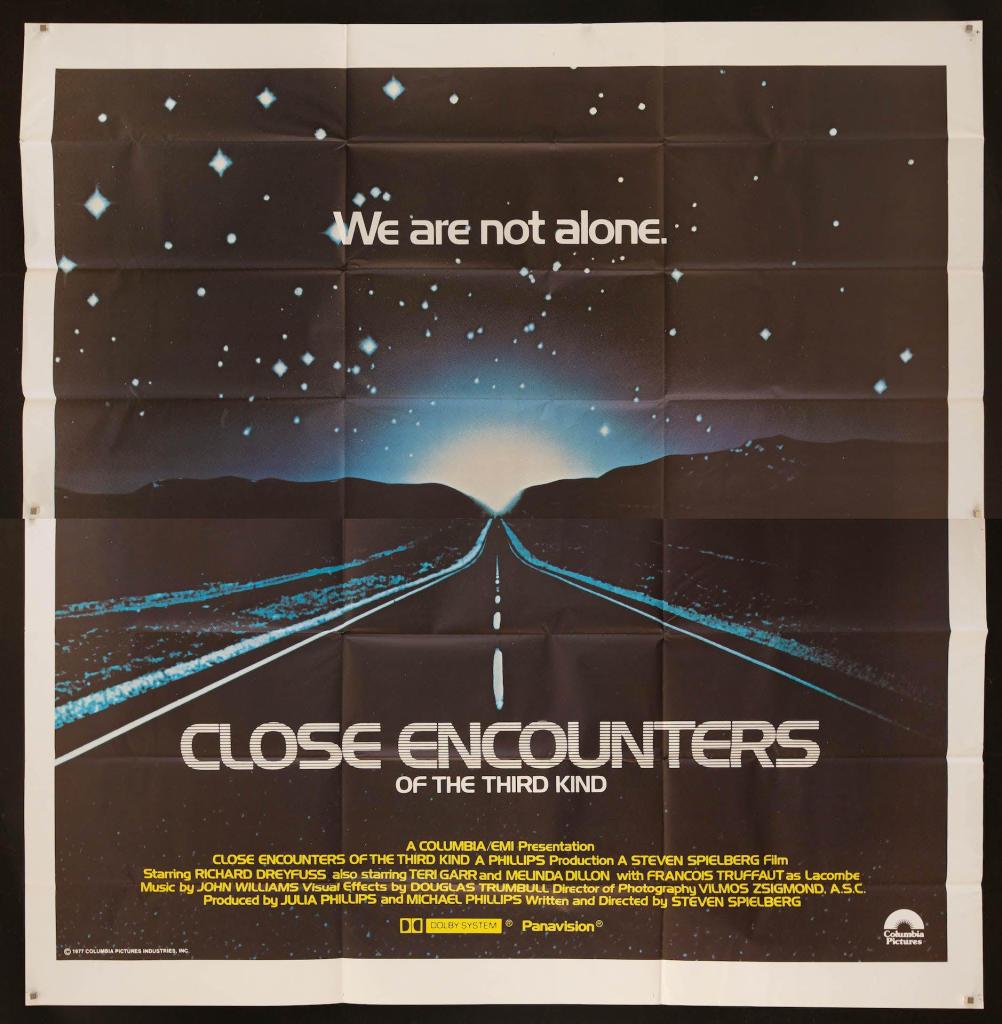
    Vintage newspaper insert, Close Encounters of the Third Kind Movie Poster

    There is a moment when the little boy, Barry, opens the door to the alien light flooding his house. The adults are terrified, scrambling to lock the windows, but Barry is just… open. He walks toward the blinding orange glow with a smile, saying simply, “Toys.” He doesn’t see a threat; he sees a wonder. He sees something new arriving.

    The stock market this morning feels exactly like that open door. For days, the adults—the analysts, the bears, the “Blue Owl” financiers—have been terrified, locking the windows against the storm of debt and doubt. But today, the door swung open, and the light poured in.

    II. The Memory of Light (Micron’s Signal)

    The source of the light is Micron Technology ($MU).

    Just like the blinding glow in the movie, Micron’s earnings report has flooded the pre-market with an undeniable intensity. The stock is up 15% this morning.

    Why? Because they didn’t just beat expectations; they obliterated them.

    • Revenue: Record-breaking.
    • Guidance: Far above consensus.
    • The Signal: They have sold out their entire supply of High Bandwidth Memory (HBM) for 2025 and 2026.

    This is the “alien” truth that the bears missed. While everyone was worrying about financing for data centers, the engineers were quietly buying every memory chip in existence. The demand isn’t slowing down; it is accelerating so fast that the industry cannot keep up. Micron is telling us that the “AI Brain” is still growing, and it is hungry.

    III. The Soft Hum of the Economy (CPI & The Fed)

    If Micron is the blinding light, the economic data is the soft, reassuring hum of the spaceship.

    The November CPI (Consumer Price Index) came in cooler than expected.

    • Headline CPI: 2.7% (vs. 3.1% expected).
    • Core CPI: 2.6% (the lowest since 2021).

    The inflation monster, it seems, is sleeping. This unexpected drop has sent Treasury yields tumbling. The 10-year yield has fallen to 4.12%, a level we haven’t seen in weeks. The Fed now has a wide-open runway to cut rates. The terrifying noise of “higher for longer” has been replaced by the harmonious tones of a soft landing.

    IV. The Fusion of Dreams (Trump Media)

    And then, there is the strange, almost cinematic subplot. Trump Media ($DJT) is surging 25% this morning.

    Why? They announced a merger with a nuclear fusion company, TAE Technologies.

    It sounds like science fiction—a social media company buying a “mini-sun” to power the future. They plan to build a 50MW fusion reactor by next year. Whether this is real or just another scene from the movie, the market loves the story. It fits the narrative of “unlimited energy” for the AI revolution.

    V. Conclusion: Walking Toward the Light

    The S&P 500 is up 0.8%, the Nasdaq is up 1.4%. The “Santa Rally,” which seemed dead yesterday, has suddenly resurrected.

    We stand at the door like Hunter, or like Barry in the movie. The adults in the room—the “smart money” managers with their 3.3% cash levels—spent the last few days frantically locking the windows, terrified of the wind, the debt, and the valuation. They saw the light outside as an invasion. They saw the alien ship and assumed it was coming to destroy the house.

    But the market, in its innocence, just opened the door.

    It saw the sold-out memory chips and the falling inflation and said, “Toys.”

    Maybe that is the only way to survive a bull market this advanced. You have to suspend the cynical logic of the adult. You have to look at a fusion reactor merger or a 15% jump in a semiconductor stock not as a sign of a bubble, but as a sign of wonder.

    The sun touched the world with gentle care this morning. It won’t last forever. Night will come again; the windows will rattle again. But right now, the light is warm, the mist is gone, and we are stepping outside.

    Disclaimer: Lights can blind. Wonder is not a strategy. Invest with your eyes open.
  • The Wind, The Parrots, and the Memory of Light

    I. The Advisory

    Today, a “Wind Advisory” was issued for Los Angeles. It started at noon and will last until 10:00 PM. The report warns of gusts up to 50 miles per hour in the hills—invisible hands shaking the power lines, threatening to snap the fragile connections that keep the city lit.

    I went out to the backyard to tighten up the yard furniture and the kids’ toys. The air was dry and restless, stripping the moisture from the leaves of the potted plants. It reminded me of the wild parrots of Pasadena.

    Black and white mugshot of a Parrot of Pasadena

    I read today that they have decided to roost at City Hall this year, a chaotic green cloud descending on the seat of order. They are descendants of escaped pets from decades ago, living ghosts of a domestic past that have learned to survive in the wild. They scream from the trees, indifferent to the traffic below, existing in a parallel world of pure instinct.

    The wind and the parrots. Both are forces that belong to the city but feel alien to it. They arrive without an invitation, disrupt the silence, and remind us that control is just a story we tell ourselves to sleep at night.

    The stock market today was exactly like this wind. A sudden, invisible gust that shook the “AI trade” until the lights flickered. We have been living in a domestic dream of endless capital, but today, the wild parrots came home to roost.

    II. The Flicker (The AI Sell-Off)

    The S&P 500 fell 1.16%, breaking below its 50-day moving average—a technical line in the sand that traders treat like a religious boundary. When we cross it, the mood shifts from “buy the dip” to “protect the house.”

    The gust started with Oracle. The news broke that Blue Owl Capital—the financier behind Oracle’s massive AI data center project—had flown away. They looked at the debt, looked at the risks, and decided the wind was blowing too hard. Oracle shares dropped 5.4%.

    Then came the “circular trade” anxiety. Amazon is reportedly investing $10 billion in OpenAI, but with a catch: OpenAI must use Amazon’s chips. It is money moving in a circle, a snake eating its own tail. The market looked at this and asked: Is this real demand, or just accounting magic?

    Nvidia fell 3.8%. Broadcom fell 4.5%. The “Santa Rally” began to look less like a sleigh ride and more like a car skidding on ice.

    III. The Memory of Light (Micron’s Earnings)

    But then, after the sun went down and the market closed, a different kind of signal emerged.

    Micron Technology ($MU) released its earnings report. In the darkness of the post-market, the numbers glowed like neon.

    • Revenue: $13.64 billion (up 57% year-over-year).
    • EPS: $4.78 (beating expectations of $3.96).
    • Guidance: Q2 revenue forecast at $18.7 billion, smashing the consensus of $14.4 billion.

    Micron is the “memory” of the AI brain. It stores the light that the processors create. And Micron is telling us that the brain is still hungry. Demand for HBM (High Bandwidth Memory) is so strong that they have sold out their entire supply for 2025 and 2026.

    The stock jumped 7% in the after-hours, a sudden burst of illumination in a dark room. It was a reminder that while the financiers (Blue Owl) are worried, the engineers are still building. The wind may be shaking the lines, but the current is still flowing.

    IV. Conclusion: The Two Winds

    So we are left with two conflicting winds.

    One is the Financial Wind—the fear of debt, the “Blue Owl” leaving, the breaking of the 50-day moving average. This wind says: Winter is coming. Retreat.

    The other is the Physical Wind—the Micron earnings, the sold-out inventory, the sheer undeniable demand for memory. This wind says: The machine is still running hot. Stay.

    I sat back down at my kitchen table. The wind outside was still howling, rattling the window pane. I thought about the parrots in Pasadena, huddled together in the trees, green feathers against the gray sky. They don’t know about stock prices or interest rates. They only know that when the wind blows, you hold on tighter to the branch.

    For now, that is the strategy. We hold on. We watch the 50-day line. We respect the wind, but we do not let it blow us away.

    Speaking of things hidden in plain sight, a man in Miami was arrested today for collecting his dead mother’s Social Security checks for four years. He kept her accounts active, a digital ghost living on in the banking system long after the body was gone. It makes you wonder: How much of the market is just a digital ghost, collecting checks from a reality that no longer exists? Or perhaps, like the man in Miami, we are just hoping no one checks the expiration date.


    Disclaimer: Winds change. Parrots bite. Invest accordingly. And watch out for the expiration dates.

  • The Blue Owl and the Ten-Second Wall

    I. The Mist Runner

    Another heavy, misty morning in Los Angeles greeted me with a specific kind of coldness. It wasn’t the biting cold of a winter in the mountains, but a damp, persistent chill that seemed to seep out of the pavement itself. It came to me as a silent reminder—a contract I had signed with myself—to wake up and run.

    The mist felt less like weather and more like a suspended ocean. The droplets were floating on their own peaceful journey until I disrupted them, my body cutting through their silence like a dull knife.

    Since I started this routine, I have been trying to stretch the time, minute by minute. A fifteen-minute run has become thirty. It is a game of accumulation. But every time I approach my previous record, a voice inside me asks the same question: Enough? Or just ten seconds more?

    It feels like eternity while I am on the verge of my limit, but objectively, it is only ten seconds. I wanted to defeat this invisible wall. I clinched my mouth hard, feeling the machinery of my body protest, and ran harder for that final stretch. My breath shortened, a fire lit in my calves, and my heart pounded against my ribs like a trapped bird. My glasses fogged up, turning the world into a smear of gray and white.

    One, two, three, four… finally, ten.

    A view through fogged glasses

    I slowed down. The transition from sprinting to walking lasted only a few steps, but in that gap, the world realigned. My breath returned to its normal rhythm. A wave of euphoric satisfaction washed over me—a confidence anchored in the simple fact of survival.

    Just ten seconds. It seems so little, a rounding error in the universe, but it changes the texture of the day. Ten seconds become hours.

    II. The Expiration Date

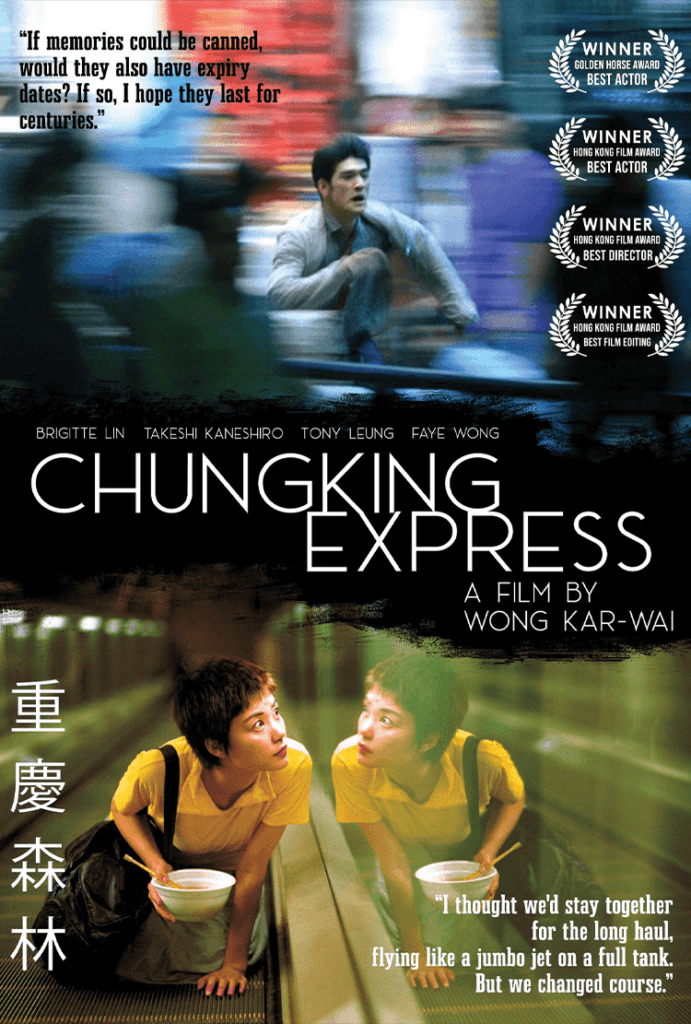
    This feeling—the running, the sweat, the arbitrary deadline—reminded me of Wong Kar-wai’s film, Chungking Express.

    Wang Kai-Wai's Chungking Express Movie Poster

    There is a character, He Qiwu (Cop 223), who is obsessed with time and expiration dates. He buys cans of pineapple that expire on May 1st, his birthday, measuring his heartbreak against the shelf life of fruit. But when the pain becomes too much, he doesn’t drink or cry. He runs.

    “When I jog, I sweat out all the water in my body. That way, there are no tears left to cry.”

    He runs to exhaust himself, to push his body so hard that his mind has no energy left to dwell on the loss. He creates his own “ten-second wall” to keep the sadness at bay.

    The stock market, I realized as I wiped the fog from my glasses, is currently He Qiwu. It is running a marathon against an expiration date—the end of the year, the end of the “easy money” cycle. It is sprinting through the mist, trying to sweat out the bad news so it doesn’t have to cry.

    III. The Blue Owl Flies Away (Oracle’s Wall)

    When I opened the terminal, the first thing I saw was Oracle hitting its own wall. The stock is down nearly 4% in the pre-market.

    The story is about a “Blue Owl.” Not a surreal creature from a dream, but Blue Owl Capital, a massive alternative asset manager. They were supposed to finance a $10 billion data center for Oracle and OpenAI—a “Stargate” project. But the deal has collapsed. Blue Owl looked at the numbers, looked at Oracle’s $100 billion debt load, and decided the risk was too high. They flew away.

    This is significant. It tells us that the “unlimited budget” for AI infrastructure is hitting a financing reality. The wall is real. You can run as hard as you want, but if you don’t have the oxygen (capital), you cannot finish the race.

    IV. The Sweat (Amazon & Nvidia)

    While Oracle struggles to breathe, Amazon is finding a second wind. The stock is up 1.3% on rumors of a massive $10 billion investment in OpenAI.

    It is a strategic sprint. Amazon is trying to force OpenAI to use its proprietary “Trainium” chips instead of Nvidia’s GPUs. It is a messy, sweaty deal—a “circular trade” where cash goes in and revenue comes back out—but it keeps the narrative alive.

    This, of course, hurts the King. Nvidia is slipping (-0.5% to -2%) as the market realizes its monopoly is being flanked. The ecosystem is trying to sweat out its dependence on Jensen Huang.

    V. The Two Languages (Silver, Oil, and Medline)

    In the background, quietly, the market is speaking two different languages at the same time.

    One language is Fear.

    Silver has surged 4.5%, breaking $66 an ounce. It is a specific, hard number. Gold and Copper are following. Meanwhile, Oil (WTI) has bounced to $56, not because demand is healthy, but because of a geopolitical spasm—President Trump just ordered a blockade on Venezuelan tankers.

    The mist is getting thicker, and investors are buying hard assets to protect themselves from the cold. But the other language is Renewal. Just as the “Blue Owl” flew away, a different door opened. Medline just pulled off the biggest IPO of the year—a $39 billion valuation, raising over $6 billion.

    This is the “ten-second wall” being broken. For years, the exit door for private equity has been welded shut. Today, it creaked open. It is a sign that beneath the fear, the heart of the capital markets is still beating strong enough to run.

    VI. Conclusion: Waiting for the Speech

    The market is currently mixed. The Dow and S&P are green, but the Nasdaq is tired, breathing heavy. We are all waiting for President Trump who will give a speech about the economy later tonight. He needs to sell the narrative that the pain is temporary, that the “ten seconds” of struggle will lead to a golden hour.

    But for now, we are just running in the mist.

    We clinch our teeth. We check the price of Silver. We watch the Blue Owl fly away.

    We run for ten more seconds, hoping that when we stop, the fog will have cleared.


    Market Snapshot (Pre-Market, Dec 17, 2025):

    • Oracle ($ORCL): Down on financing failure.
    • Amazon ($AMZN): Up on OpenAI deal rumors.
    • Silver: Breakout at $66.
    • Sentiment: Cautious optimism, waiting for the “Second Wind.”

    Disclaimer: Running requires oxygen. Investing requires capital. Ensure you have enough of both before you start.

  • The Epilogue Sequence

    I. The Architecture of Silence

    It was a dry, clear night in Los Angeles. The kind of December night where the air feels thin and static, as if a spark could jump from your fingertip to the doorframe. I sat at my kitchen table, the wood grain cool under my hands, looking out at the grid of city lights stretching toward the hills. It was 9:00 PM. The time when the noise of the traffic fades into a low, electric hum, and the logic of the day dissolves into the logic of the night.

    I was trying to decode the Federal Reserve’s recent decision and the noise surrounding the latest jobs report. The press conference had ended days ago, but the words still hung in the air like smoke in a windowless room. The market was confused. I was confused. We were all just waiting for a signal.

    On my laptop screen, a video from Yahoo Finance was playing. The title had something to do with “Wall Street Now,” but to me, it felt more like a weather report for a planet I didn’t live on.

    II. The Dream Sequence

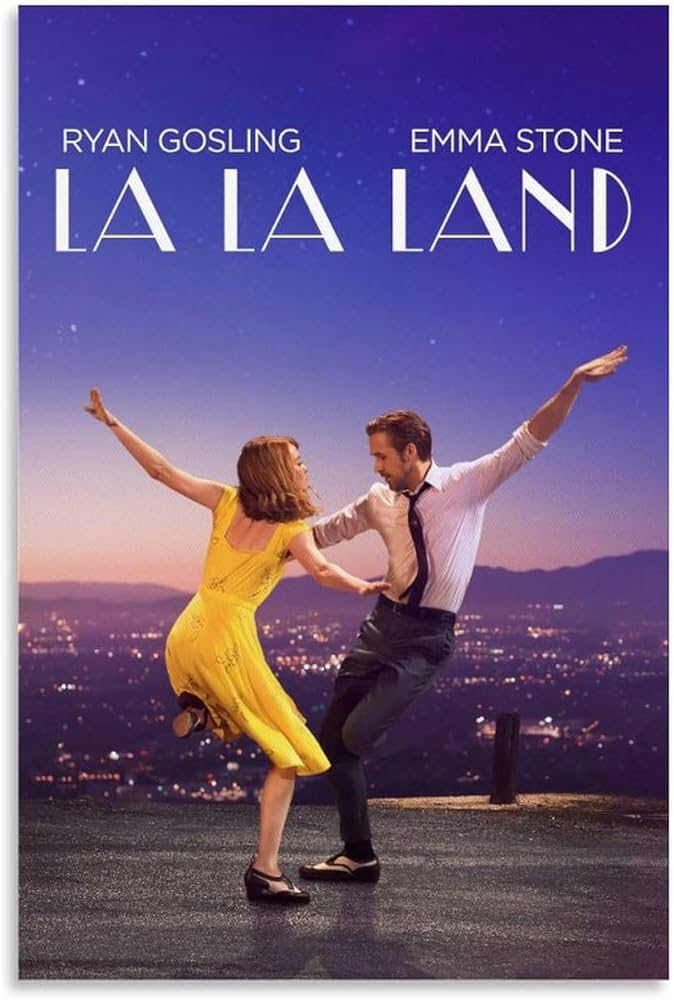
    La La Land Movie Poster featuring Ryan Gosling and Emma Stone dancing in the city of Los Angeles backdrop

    The scene on the screen—and the mood of the market—reminded me of the final sequence in Damien Chazelle’s La La Land. You know the scene: the “Epilogue.” Mia walks into the jazz club, sees Sebastian, and for seven minutes, we watch a montage of the life they didn’t have. It is a perfect, Technicolor dream where everything went right, where there was no compromise, no heartbreak.

    And then the music stops. Sebastian hits the final note. The dream evaporates, leaving them with the reality: successful, but separate. They exchange one final look—sad, but happy—and the movie ends.

    The financial market today feels exactly like that dream sequence. We are watching a montage of perfection—the “Soft Landing,” the “AI Utopia,” the “No Landing” scenario. It is vibrant and seductive. But if you look at the edges of the frame, the music is starting to slow down. The reality is waiting for the song to end.

    III. The Report: The 3.3% Warning

    While the market hummed its happy tune today—with Nvidia, Oracle, and Broadcom staging a rebound—I opened the latest dispatch from Wall Street to check the sheet music. The notes are discordant.

    1. The “Dangerous” Optimism (Bank of America Survey)

    The most striking data point today comes from the Bank of America Global Fund Manager Survey.

    The cash levels in these managers’ portfolios have dropped to 3.3%.

    To put this in perspective:

    • Above 5%: Panic. A buy signal.
    • Below 4%: Euphoria. A sell signal.
    • At 3.3%: This is the lowest level since early 2021. It means everyone is “all in.” There is no one left to buy. The auditorium is full, the parents are all standing, and there is no more room on the risers. When optimism is this high, the market becomes fragile. It is a glass vase sitting on the edge of a shelf.

    2. The Oil Crash ($55)

    While the equity market dreams of AI, the commodity market is screaming about reality. WTI Crude Oil crashed below $55 today, the lowest level in four years.

    The bulls will tell you this is “Oversupply.”

    The bears will tell you this is “Demand Destruction.”

    When oil collapses like this, it is usually the economy’s way of saying it has stopped breathing deeply. It is a signal of lethargy, a prelude to the “sad” part of the movie.

    3. The Jobs Data (4.6% Unemployment)

    The delayed employment numbers for October and November finally arrived, confirming the trend. Unemployment has ticked up to 4.6%.

    It isn’t a disaster—yet. But combined with the oil crash, it paints a picture of an economy that is cooling much faster than the AI stock prices suggest.

    IV. Conclusion: The Final Look

    We are living in the spread between the “Happy” (AI Stocks, Manager Optimism) and the “Sad” (Oil, Jobs, Cash Levels). The market wants to stay in the dream sequence. It wants to believe that the 18% drop in Broadcom over the last three days was just a glitch, not a warning. It wants to believe that the 3.3% cash level is a sign of confidence, not a sign of exhaustion. But I am waiting for the final note.

    I closed the laptop. The city outside was perfectly still, a sea of electric stars. I decided I would not make a move. Not yet. The Fed is looking for “clarity” in the January data. I will do the same.

    We smile, we watch the AI stocks dance, but we keep our coats on. The performance is almost over.


    Disclaimer: This is not financial advice. I am just a man listening to the dry wind in the middle of the night. The numbers are real, but the story is mine. Do your own research before you step into the dark.

  • The Back of Time’s Head and the 4.6% Signal

    I. The Choir of Small Penguins

    It was my twins’ first school performance for the holidays. Every kid was dressed in a binary harmony—black bottoms, white tops—standing on the step-risers like a grand church choir, though they were barely tall enough to reach the microphone stands. The stage was decked out with the kind of flat, primary-colored Christmas decorations you’d see in a Sunday morning cartoon from 1980.

    The parents stood in the dark auditorium, their eyes starry, focused solely on their own offspring. It is a strange biological imperative. A hundred children are singing, but you only hear two. All the kids looked adorable, of course, but through the distorted lens of my own bias, my twin girls looked like the only real things in the room. Precious, finite, and fleeting.

    I tried my best to catch every single moment, to record it on the magnetic tape of my memory, knowing that someday I will terribly miss this. I couldn’t stop smiling, but deep in my chest, there was a specific weight. A tenderness. It was somewhat nostalgic, even though the moment hadn’t passed yet.

    To put it in simple context: Sad, but happy.

    It was the kind of sadness that feels like a warm stone in your pocket. You know it’s there, weighing you down slightly, but its warmth is the only thing proving you are alive.

    II. The Angle We Cannot See

    It reminded me of a scene from Edward Yang’s film, Yi Yi.

    a picture of DVD insert of the movie Yi Yi front cover.

    There is a young boy in the movie, Yang-Yang, who goes around taking photographs of the backs of people’s heads. When asked why, he simply says, “You can’t see it yourself, so I’m helping you.”

    We walk through life seeing only what is in front of us, blind to our own trailing shadows, blind to the “back” of our own existence. Standing there, watching my daughters sing about snowmen and reindeer, I realized I was trying to photograph the back of Time’s head. I wanted to see the angle that is usually hidden—the future that was rushing toward them, the past that was slipping away from me.

    The financial market, in its own cold, numerical way, attempts the same impossibility. It tries to capture the invisible momentum of the world through a lens called “Data.” It tries to show us the back of the economy’s head—the parts we miss because we are too busy living inside it.

    Today, on December 16, the lens focused, and the picture it took was blurry, complicated, and undeniably shifting.

    III. The Report: Examining the Photograph (December 2025)

    We finally received the delayed employment data for October and November. Like a film developed late, the images are grainy due to the government shutdown, but the contours are visible. And what we see is a structural shift.

    1. The “Efficiency” Shock (The Public Sector Purge)

    The headline number for November Non-Farm Payrolls came in at +64,000, beating the muted expectation of 50,000. But the real story is in the “back of the head”—the revisions and the sector breakdown.

    October saw a massive drop in government employment—162,000 jobs vanished. This is the direct result of the “efficiency department” activity (the so-called DOGE initiative). We are seeing the physical manifestation of the new administration’s policy: trimming the fat, which inevitably means firing the butcher. November stabilized with only a 6,000 decrease, but the structural damage to public sector headcount is done.

    2. The Unemployment Tick (4.6%)

    The unemployment rate has risen to 4.6%, up from the expected 4.5%.

    In a vacuum, rising unemployment is a recession alarm. However, looking closer, the rise is partly due to an increase in Labor Participation. More people are entering the frame of the photograph, looking for work. When the denominator grows, the rate rises. This is not the “death spiral” of demand destruction; it is the “adjustment friction” of a changing labor supply.

    3. The Death of Inflation (Wages +0.1%)

    If you needed proof that the inflation dragon is dead, this is it. Average hourly earnings rose by a microscopic 0.1%.

    Wage pressure has evaporated. For the Federal Reserve, this is the green light. The argument that “a strong labor market will reignite inflation” is now null and void. Income is barely keeping pace with life; there is no spiral here.

    4. The “Goldilocks” Retail Data

    Just as we started to worry about the consumer, Retail Sales (Control Group) posted a surprising +0.8%. The consumer is not dead; they are just selective. They are spending, but they are not getting raises. It is a precarious balance, but for now, the engine is running.

    I know by heart, I am going to miss this day. Going to miss the smiles, the eyes, the looks, the exciting voices, the comforting hugs, the proud looks on their faces…


    Disclaimer: Memories are subjective, and so is data. Invest with eyes on the horizon, not just the rearview mirror.

    IV. Conclusion: The Soft Landing is a Quiet Room

    The performance ended with a sudden, chaotic burst of applause. The children on the risers bowed, some out of sync, some too deep, all of them smiling that unguarded smile that adults lose somewhere between their first tax return and their third heartbreak.

    My twins found me and my wife in the crowd and waved. In that gesture, I saw it again—the passage of time. They were no longer the toddlers I carried; they were small people with their own gravity, drifting slowly away from my orbit into their own.

    The market’s reaction today—10-year yields drifting down to 4.14%, futures pushing slightly higher—is the financial equivalent of this moment. The chaotic noise of the post-pandemic boom has faded, replaced by a polite, measured applause. The “Civil War” at the Fed is ending. With unemployment at 4.6% and wages flat, the aggressive tightening is over. A January Rate Cut is no longer a debate; it is a necessity.

    We are entering a phase that feels much like the auditorium as the parents begin to stand up and put on their coats. The “inflation scare” has exited the stage. The drama is finished. What is left is a quieter, slower economy.

    Is it a recession? The retail numbers say no.

    Is it a boom? The unemployment numbers say no.

    It is simply stabilization. It is the “sad but happy” equilibrium.

    The exuberance of the child is gone (sad), but the stability of the youth has arrived (happy). The economy, like my daughters, is growing up. It is becoming cooler, calmer, and more predictable.

    As I walked out of the school into the cool December air of Los Angeles, holding my wife’s hand, I realized that this is what a “Soft Landing” actually feels like. It isn’t a victory parade. It’s just the relief of knowing that the crash didn’t happen, and that we all get to go home, have dinner, and prepare for whatever comes next.


    Disclaimer: Memories are subjective, and so is data. Invest with eyes on the horizon, not just the rearview mirror.

  • The Seven Dollar Silence

    ‘Tis the season…for money.

    The automatic doors slid open with a resigned sigh. Inside, the supermarket was trying too hard. Tinsel strangled the checkout lanes, silver and red, reflecting the harsh fluorescent glare that makes everyone look like they have a mild fever. Above the produce section, plastic snowflakes hung from the ceiling tiles on invisible fishing lines. They spun slowly in the draft from the air conditioner, revolving like tiny, frozen galaxies that didn’t care about us or our groceries.

    A robotic Santa stood near the entrance, waving a stiff, mechanical hand at a stack of onions. Whir-click. Whir-click. The sound was rhythmic and dry, like a metronome counting down the time until closing. The speakers were playing a jazz version of “Jingle Bells” that sounded like it had been recorded underwater. It was a festive scene, technically, but it felt hollow, like a stage set for a play that had been cancelled years ago.

    I went there to get some gift cards. The enormous refrigerators were humming a low, flat note, vibrating against the stacks of peppermint bark. Cash seems too informal, too raw, so I figured a Visa gift card would look formal for acquaintances . Proper. Especially, when I truly don’t ‘know’ them to find the right gifts. 

    Visa Gift Card

    At the counter, the clerk, a man with tired eyes that looked like they had seen too many receipts, scanned the card. I watched the numbers flash on the screen. Then I couldn’t believe my eyes. Visa charges a $7 “activation” fee per card.

    Seven dollars. To activate money that is already money.

    I just couldn’t do it. The absurdity of it rose up in my throat like a dry cough. I had to cancel them. It doesn’t make sense to me. It felt like a tax on existence, a toll booth erected in the middle of a hallway in your own house.

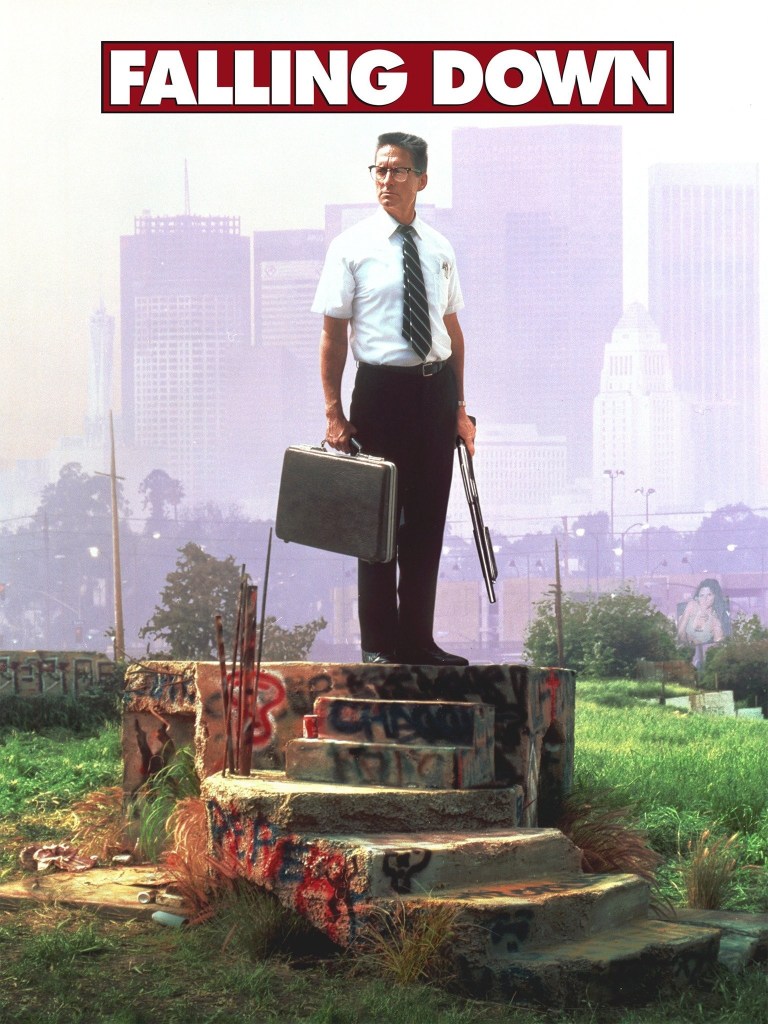
    It reminded me of that scene in Falling Down.

    Falling Down Movie Poster, Michael Douglas, Los Angeles Downtown backdrop

    Michael Douglas, with his white shirt and tie, standing in the convenience store. He just wants a soda. The clerk wants eighty-five cents. Douglas argues it should be fifty. He’s not mad about the thirty-five cents; he’s mad about the principle of the drift. The way the world silently slides away from logic while we are busy sleeping or working. The can of soda is the same can, but the cost of holding it has changed.

    The clerk at Ralph’s didn’t have a bat, and I didn’t have a briefcase filled with weapons, but the feeling was the same. The rules had shifted underneath my feet without a memo.

    I walked out into the parking lot. The sun was pale and distant. It occurred to me that the stock market is currently charging us a similar activation fee.

    For the last two years, we walked into the store, picked up anything labeled “AI,” and it worked. It was simple. But listening to the latest whispers from Wall Street—specifically the notes from Goldman Sachs for 2026—it seems that the easy transaction is over. The activation fee for profit is going up.

    They say the “Buy Anything AI” phase has finished. The first chapter, where you could throw a dart and hit a winner, is closed. Now, we are entering Chapter Two. This is the “Show Me” phase. You can’t just buy the concept of the future anymore; you have to buy the plumbing. The copper wires. The power grids. The “Enablers” who build the stage, not just the actors standing on it.

    It’s a strange rotation. The “Magnificent Seven”—those towering giants that have held up the sky like Atlas—are tired. The experts say the light is shifting to the corners of the room we haven’t looked at in years. Financials. Industrials. Even Europe, that old, dusty museum across the ocean, might be forced to wake up and grow, simply because it has no other choice.

    They talk about Copper becoming the new Gold. Not because it sparkles, but because the AI gods need electricity, and electricity needs copper. It is a return to the physical, to the heavy, conductive reality of things.

    The market, like the Visa card, demands a fee for its utility. Next year, that fee is discernment. You cannot simply hold the card; you must understand the machinery behind it.

    I sat in my car for a while, watching a stray shopping cart roll slowly across the asphalt, driven by a wind I couldn’t feel. It bumped against the curb and stopped.

    I turned the key, and the engine hummed a low, neutral note. The radio was off. The problem of the gifts remained on the passenger seat, invisible and unsolved. The cash was still too cold. The cards were still a swindle. I tried to think of a third option, something that sat comfortably between the two, but my mind was blank.

    I just sat there, listening to the idle of the engine, waiting for a solution to arrive from the gray sky, but nothing came down except a fine, misty rain. I still haven’t come up with another idea to replace them.


    Disclaimer: This post is a collection of thoughts floating in the space between a supermarket checkout line and the stock market. While it mentions financial concepts, Goldman Sachs, and the price of copper, it is not financial advice. I am just a person sitting in a car, listening to the rain, trying to make sense of activation fees. The market, like a mechanical Santa, is unpredictable. Please consult a professional before making any investment decisions, lest you find yourself paying a toll you didn’t expect.

  • The Fog, The Mechanic, and The Ghost of the 90s

    I. The Cloud Runner

    It was a heavy, foggy morning today. The kind of fog that doesn’t just sit on the city but swallows it whole, erasing the edges of the world.

    I went for a run early, before the sun had a chance to burn the gray away. The air was thick, almost gelatinous. I could feel the tiny droplets floating in the suspension, hitting my face like microscopic ghosts. It was quiet. The usual hum of Los Angeles traffic was muffled, wrapped in wet cotton.

    Some might find this spooky, the setting for a horror movie where monsters with too many limbs descend from the mist. Others might find it suffocating. I am the latter—I find it calm. Comforting, even. Running in the heavy fog makes me feel like I am running inside a cloud. The path ahead is invisible until I am stepping on it. The path behind disappears the moment I leave it. There is only the immediate now, the rhythm of breath, the slap of shoes on damp pavement.

    I couldn’t help but think that the crowd in the stock market is exactly like that when the correction called, fog hits the market.

    Most people fear the lack of visibility. They want the bright, harsh sunlight of certainty. They panic when they can’t see the horizon. But there is a specific kind of runner who loves the fog. They understand that in the gray, the distractions vanish. You stop looking at the destination and start paying attention to the texture of the road. More than oftentimes, you can see better which stocks are to keep or lose in the fog season.

    It’s a immensely heavy movie to talk about in the morning but…

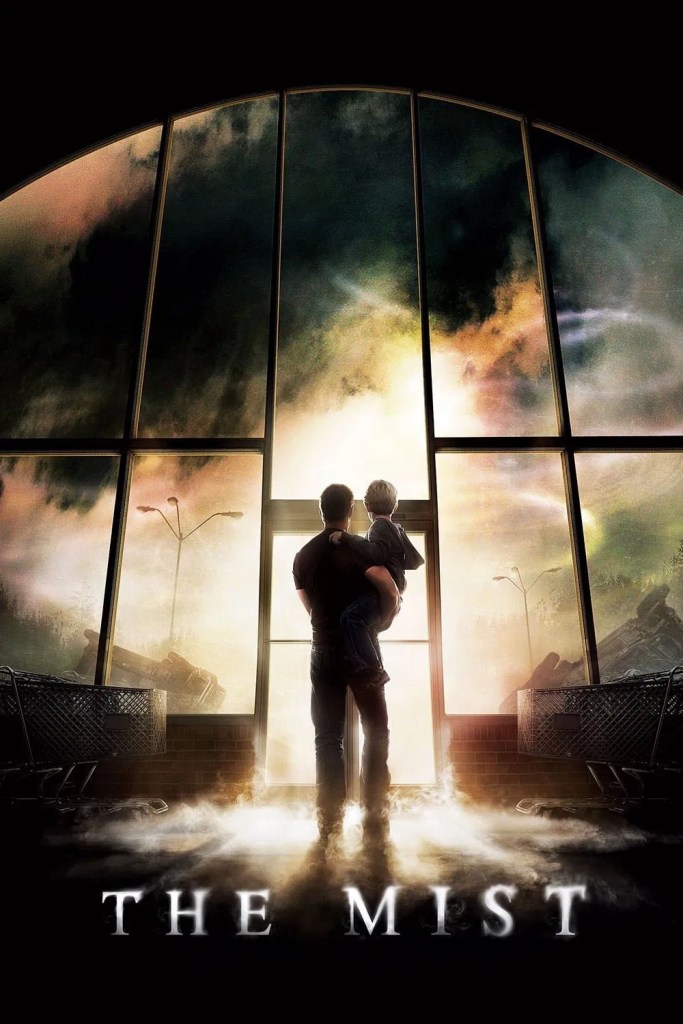
    I was reminded of the ending of Frank Darabont’s movie, The Mist. Not the monsters, but that feeling of driving a car into the white unknown, the tank running low, the passengers terrified. The characters believe the world has ended because they can’t see it. They make drastic, tragic decisions based on the fear of the unseen. But if they had just waited—if they had just sat still in the car for a few more minutes—the mist would have cleared to reveal the army, the rescue, the continuation of life.

    The market right now is full of people in that car. They see the fog of conflicting data—growth without inflation, cuts without recession—and they are terrified. They are ready to give up.

    But if you roll down the window and listen, really listen, you can hear a sound cutting through the mist. It isn’t a monster. It is the hum of an engine we haven’t heard in thirty years.

    II. The Ghost of the 90s

    We are presented with a paradox that feels almost literary in its convenience: robust economic growth coupled with falling inflation. In the textbooks of the old world, these two do not dance together; when growth accelerates, prices usually catch fire.

    But the thesis presented by the current administration, and echoed by the Fed’s recent maneuvers, is that the rules of gravity have been temporarily suspended by Productivity.

    The argument is that Artificial Intelligence is doing for us what the internet did for Alan Greenspan in the 1990s. This is the “Ghost of the Nineties.” It is a “supply-side shock.” If a machine can do the work of ten men for the cost of a kilowatt-hour, prices naturally fall even as profits rise.

    This is the sound in the mist. A world where we can have our cake, eat it, and still lose weight. It is a seductive narrative, but we must verify if the engine is real.

    III. The Plumber, Not the God

    There is a misunderstanding regarding the Federal Reserve’s recent actions. The market sees the Fed buying bonds and whispers “Stimulus.” They imagine the Fed as a rainmaker, summoning a deluge of liquidity to lift all boats.

    However, a closer inspection reveals the Fed is acting not as a god, but as a nervous plumber.

    The distinction lies in the piping. True Quantitative Easing (QE)—the “offensive” liquidity of 2020—involves buying long-term debt to force money into risky corners of the world. What is happening now is the purchasing of short-term bills to manage bank reserves. It is a technical adjustment, a “calibration of depth.”

    Imagine a diver descending into the abyss. In 2019, the Fed dove too deep, draining too much liquidity, and the diver (the Repo market) blacked out. They are terrified of that darkness. The current bond buying is simply the Fed checking the oxygen tank and ascending a few meters to ensure the diver doesn’t drown. It is maintenance, not magic.

    IV. Strategic Analysis: The Barbell in the Mist

    So, how do we run in this fog? We can’t see the finish line, but we know the terrain. We adopt a “Barbell Strategy.”

    1. Side A: The Efficiency Monopoly (Aggressive)

    We bet on the engine. If the “Productivity Thesis” is real—if the fog is hiding a boom and not a cliff—then the winners will be the companies creating the deflationary shock. These are the AI infrastructure plays, the nuclear power providers, and the dominant software platforms. They win because they are the source of the efficiency the Fed is betting on.

    2. Side B: The Cash Fortress (Defensive)

    We respect the lack of visibility. We do not buy mediocre companies hoping for a bailout, because the Fed is only doing maintenance, not stimulus. We hold short-term Treasuries and high-grade corporate bonds. We use the Fed’s “plumbing repair” to earn safe yield. If the productivity thesis fails—if the mist clears to reveal a recession—this side of the portfolio keeps us alive.

    V. Conclusion: Waiting for the Army

    By the time I finished my run this morning, the sun started peaking. The fog didn’t vanish all at once; it retreated in patches, revealing a street sign here, a palm tree there.

    The “Civil War” at the Fed tells us that even the people driving the car don’t know exactly where the road goes. They are arguing over the map while the windshield is covered in condensation.

    But we are not the passengers in The Mist. We do not need to make a tragic, final decision based on fear. We can afford to keep running at a steady pace. We bet on the efficiency of the machine, but we keep our life vests on. We listen to the mechanic working on the engine, distinguishing the sound of repair from the sound of acceleration.

    The fog is not the end of the world. It is just a cloud that came down to earth to touch us for a while. Keep moving. The road is still there.


    Disclaimer: The visibility is zero, but the gravity is constant. This is not financial advice, just a map drawn on a foggy window. Do your own research.

  • The Hum of the Golden Prometheus

    He bought a pack of cigarettes at a bodega on 48th Street, even though he had quit three years ago. He didn’t light one. He just held the pack in the deep pocket of his trench coat, turning it over and over with his thumb, feeling the sharp corners against the lining. It was a grounding technique. A small, tactile ritual to remind him that his hands were still there, even if the rest of him felt like it was dissolving into the gray, static mist of the city.

    New York in December possesses a specific kind of loneliness. It is a loneliness that is loud, illuminated by millions of LEDs that offer visibility but no warmth. He had been walking for hours, looking for something he couldn’t quite name. Maybe he was looking for her—the woman who had left a half-finished cup of coffee on his table and vanished into the subway system—or maybe he was just searching for the hidden logic of the city itself.

    He turned the corner and there it was. Rockefeller Center.

    A lit-up, giant Christmas tree at The Rockefeller Center

    The famous Christmas tree stood as a towering pyramid of artificial joy. Below it, the ice skaters moved in endless counter-clockwise circles, carving white scars into the frozen surface. To him, they looked like particles in an accelerator, spinning, waiting to collide.

    He stopped in front of the golden statue of Prometheus. The Titan floated there, holding fire in his hand, offering it to mankind. A gift. Or perhaps, a curse.

    “He looks tired,” a voice seemed to say.

    He turned his head. There was no one there. Just a tourist adjusting a scarf, and a security guard checking a phone. The voice had come from inside the hum of the city itself.

    He looked back at Prometheus. And then, past the statue, his gaze drifted up to the looming limestone tower that John D. Rockefeller had built. The ghost of the old man hung thick in the air here. Rockefeller was a man who understood silence. He didn’t scream; he calculated.

    He knew that the world didn’t run on dreams. It ran on fluid.

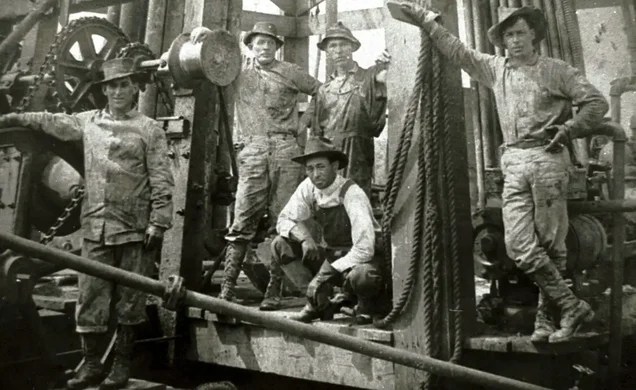
    John D Rockefeller posing for the camera with his fellow oil rig workers, circa 1870

    In 1870, that fluid was oil. Rockefeller didn’t gamble on finding it; he simply controlled where it flowed. He built the pipes, the refineries, the tanks. He owned the blood of the industrial age.

    As the man stood there, clutching the unsmoked cigarettes, the mystery of the missing woman faded, replaced by a much larger, colder mystery. The city wasn’t just a collection of buildings. It was a hungry mouth.

    The hum. He could hear it now, rising from the subway grates, vibrating in the glass of the skyscrapers. It wasn’t the sound of traffic. It was the sound of 183 Terawatt-hours of electricity being devoured, chewed, and swallowed.

    He closed his eyes, and the numbers began to scroll behind his eyelids, glowing like neon signs in a rainstorm. The narrative of the city rearranged itself in his mind.

    The New Oil is Invisible

    The realization hit him with the quiet force of falling snow. The world was standing in 1911 again. But the oil wasn’t black sludge anymore. It was the electron.

    Futuristic, Tron-esque visual Data Center

    The Artificial Intelligence that everyone talked about—the ghost in the machine—was not a brain. It was a stomach. And it was starving.

    • The Hunger: In 2024, the data centers hidden in these buildings consumed the same amount of power as the entire country of Pakistan. By 2030, they would eat 12% of everything the United States produced.
    • The Bottleneck: He looked at the lights flickering on the tree. The grid was old. It was a circulatory system built for a human, now trying to keep a god alive. The veins were bursting.

    The “mystery” he was solving wasn’t about who had left him. It was about what was coming. The smart money—the Rockefeller money—wasn’t betting on the thoughts the AI would think. It was betting on the meal it had to eat.

    The Three Clues

    He took the cigarette pack out of his pocket and set it on the ledge of the fountain. It was an offering to Prometheus. In exchange, he took the three names the city whispered to him.

    1. The Source (The Nuclear Heart): The wind and the sun were too fickle for a machine that never sleeps. The machine demanded the splitting of the atom. Constellation Energy (CEG) and GE Vernova (GEV). They were the new standard oil wells. Microsoft wasn’t buying power; they were buying certainty. They were restarting Three Mile Island not for nostalgia, but for survival.
    2. The Veins (The Grid): You cannot beam the power. You have to carry it. Quanta Services (PWR). They were the ones digging up the streets, replacing the old, brittle arteries with something that could handle the heat.
    3. The Fever (The Cooling): The machine burns. Vertiv (VRT) is the ice. Without them, the brain melts.

    The skaters kept spinning. The tree kept shining. But the scene had changed for him. He no longer saw a holiday display. He saw a massive, desperate machine gasping for air.

    Rockefeller’s ghost wasn’t haunting the plaza. He was nodding. He who controls the flow, controls the world.

    The man pulled his collar up against the wind. The woman wasn’t coming back. But the lights? The lights were going to get brighter. And someone had to pay for the electricity.

    He turned away from Prometheus and walked back into the dark, humming city. He knew exactly where to put the money now.


    Disclaimer: I am not a financial advisor. I am just a man watching the seasons change through a window in a city that has no seasons. The markets are like cats; they do not care about your plans, and they will go where they please. The numbers on the screen are real, but the future they promise is just a reflection in the glass. Do your own research, before the lights go out.

  • The Gravity of Great Expectations

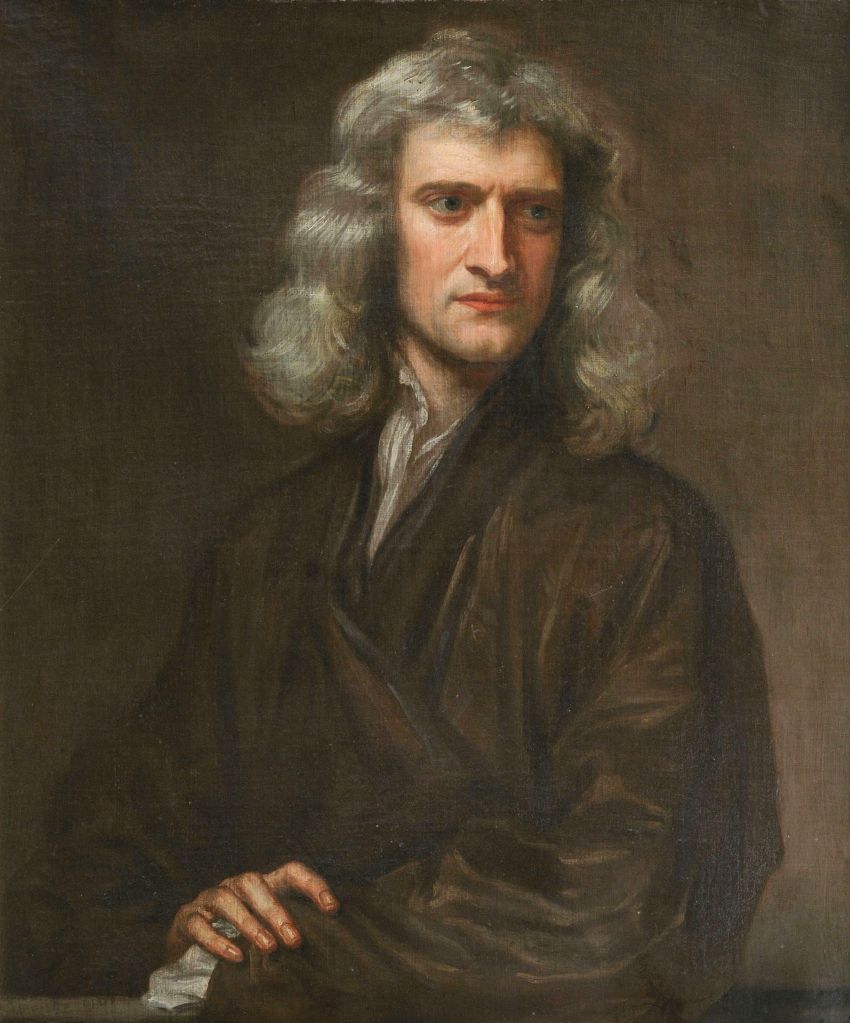
    In the spring of 1720, Sir Isaac Newton—the man who untangled the rainbow and defined the laws of gravity—did something spectacularly foolish. He bought stock in the South Sea Company.

    Portrait of Sir Issac Newton

    He was a genius, arguably the smartest man who ever lived. But as the stock soared, he panicked, bought more at the top, and eventually lost £20,000 (millions in today’s money) when the bubble burst. He later famously muttered, “I can calculate the motion of heavenly bodies, but not the madness of people.”

    It is a comforting thought for us mere mortals. If the man who invented calculus couldn’t figure out a “pump and dump,” what chance do we have? The market does not care about your IQ. It does not care about your logic. It is a beast of pure, unadulterated emotion.

    Today, the market proved Newton right once again. It ignored the physics of earnings and surrendered to the madness of expectations.

    1. “Not Quite My Tempo”

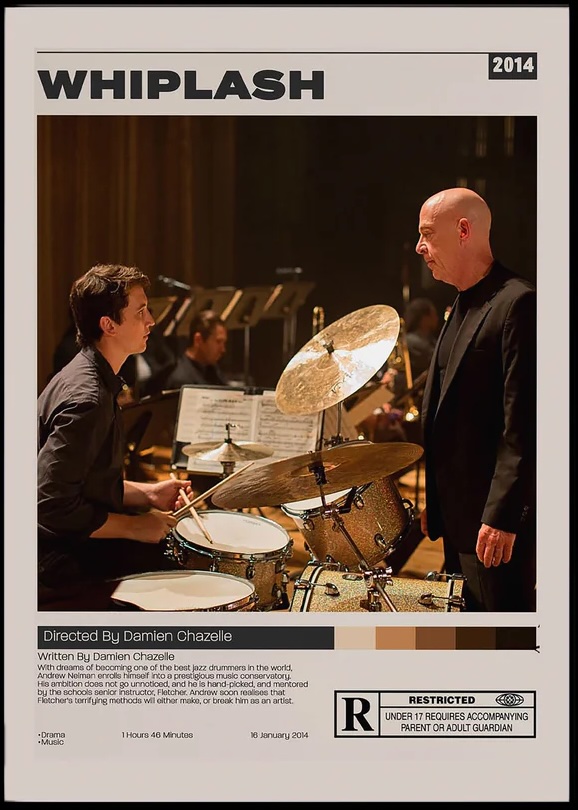
    Whiplash Movie Poster

    The market today reminded me of Terence Fletcher, the terrifying jazz instructor from the movie Whiplash.

    In the film, the protagonist plays the drums with bleeding hands, executing a complex rhythm perfectly. Fletcher listens, waits for a beat, and then hurls a chair at his head. “Not quite my tempo,” he sneers.

    Broadcom ($AVGO) is the drummer.

    Yesterday, they played a perfect set. They beat earnings expectations ($1.95 EPS vs $1.87). They beat revenue ($18.0B vs $17.5B). Their AI revenue surged 74%. They have a backlog of $73 billion—enough orders to keep their factories humming for years.

    And what did the market do? It threw a chair.

    Broadcom stock crashed 11.4%.

    Why? Because Mr. Market, like Fletcher, is a sadistic perfectionist.

    • “Your backlog is $73 billion? Nvidia’s is bigger.”
    • “You beat earnings? But you didn’t raise your full-year guidance enough.”
    • “You rely too much on Google? What if they leave you?”

    It wasn’t about the performance. It was about the tempo. The market wanted an explosion; Broadcom gave them a steady, profitable hum. And in this “AI Bubble” era, what Mr. Market wants is a much faster tempo.

    2. The Oracle Prophecy (That Wasn’t)

    If Broadcom was the victim of high standards, Oracle was the victim of a whisper campaign.

    At 10:57 AM, a rumor spread through the trading floor like a contagion. A report claimed that Oracle’s massive “Stargate” data center for OpenAI—the infrastructure meant to power the next generation of intelligence—was delayed from 2027 to 2028 due to labor shortages.

    The reaction was immediate and visceral. The “AI Capex is slowing” narrative took hold. Fermi Energy, a company building power plants for these data centers, collapsed 34% in minutes. It was a massacre based on a timeline shift.

    Oracle denied it later, claiming everything was on schedule. But the damage was done. The market had already calculated the “madness of people” and sold off. It felt like watching a crowd trample each other to exit a theater because someone thought they smelled smoke.

    3. The Hawks in the Wings

    While the tech sector was eating itself, the Federal Reserve provided the grim soundtrack.

    Austan Goolsbee and Jeffrey Schmid—the Fed officials who voted against this week’s rate cut—stepped up to the microphone. They didn’t soothe the market; they scolded it. They reminded everyone that inflation is still “sticky” and that the labor market, while cooling, isn’t dead.

    Their comments pushed the 10-Year Treasury Yield up to 4.19%. This is the invisible gravity that pulls everything down. When yields rise, the “future money” of AI stocks becomes less valuable. It makes the chair that Fletcher throws feel even heavier.

    Conclusion

    Sir Isaac Newton eventually banned anyone from speaking the words “South Sea” in his presence. He retreated to the quiet geometry of his study, back to the predictable, comforting laws of physics where every action had an equal and opposite reaction, and apples fell down, not up.

    We, however, do not have the luxury of such exile. We must live in the madness. We must walk through the crowded market where chairs are thrown at perfect drummers and whispers turn into hurricanes.

    But there is a lesson here, drifting like smoke in a jazz club. When the market acts like Fletcher, hurling abuse at excellence, demanding a tempo that no human hand can play, it is usually time to stop drumming. It is time to step off the stage, walk out the back door into the cool night air, and just listen.

    The music hasn’t stopped. It has just changed keys, shifting from a major chord to something minor, something unresolved. The city lights of Los Angeles blink on, one by one, indifferent to our gains and losses. The stars are up there, behind the smog, following their own ancient, silent algorithms. And down here, we wait for the rhythm to find us again.


    Disclaimer: I am not a financial advisor. I am just a man sitting under a tree, hoping the apple that falls is fruit, and not a chair. Do your own research.

  • The Bored King and the Space Between Stars

    I often compare life to the stock market. How much a company’s rises and falls look similar to life. It doesn’t need to be a big scale. From small-cap companies to hyperscalers, everybody rises and falls. The stages of a company’s growth mirror life.

    Startup companies are infants, screaming for attention and resources. Then you grow up to be toddlers, then teens—wild, volatile, full of promise and danger—as the company’s size gets bigger. Mid-cap to large-cap, a few hundred million to a few billion… then you reach the peak of your life. Strong career moves. Confident. Feeling like you’re invincible. Everyone wishes that feeling would last forever.

    But when there is a rise, there is a fall. Before the fall, you stay big for a while. You feel like a bored king, sitting on a throne that has become too comfortable, until you get pushed out by a new boss in town.

    Where am I at now? Where do I go from here?

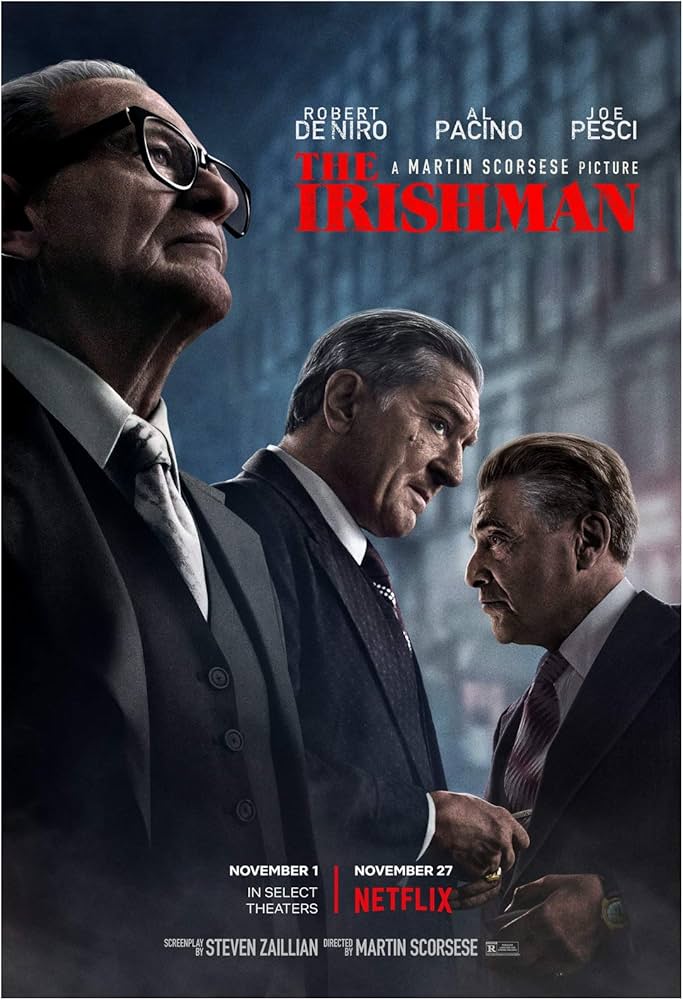
    The Irishman movie poster. Robert De Niro. Al Pacino. Joe Pesci.

    I sat in my chair, listening to the hum of the refrigerator, thinking about Frank Sheeran in Scorsese’s The Irishman. There is that final shot—Frank sitting alone in the nursing home, the door left slightly ajar. He isn’t dead, but his era is. He was a player in the biggest game in town, a “large cap” enforcer in a world of unions and mobs. He rose, he peaked, he grew powerful. And then, slowly, the world rotated away from him. The specific violence he traded in became obsolete. He became a legacy asset, depreciating in a quiet room.

    Today, the stock market feels like it is watching that same door left ajar.

    1. The Bored King Stumbles: Broadcom

    Broadcom ($AVGO) is the Frank Sheeran of the semiconductor world—efficient, brutal, and historically reliable. Today, it is down ~8%.

    Why? It didn’t fail. In fact, it grew its AI revenue by 74%. It has a backlog of $73 billion. In any other era, these numbers would be a coronation. But today, the market looked at Broadcom and saw a bored king. The expectations were set for perfection, for immortality. Broadcom merely delivered greatness.

    The investors, like fickle courtiers, found flaws: “You rely too much on Google.” * “Your margins are slipping because memory is expensive.”* They are rotating their loyalty. The money is moving out of the “invincible” AI conquerors and drifting into the mundane—the “value” stocks, the cyclical companies that have been ignored like old furniture. It’s a “Great Rotation.” The bored kings are being sold to buy the peasants.

    2. The New Boss: OpenAI’s Price Hike

    While the old guard stumbles, the new boss is flexing. OpenAI released GPT-5.2 a day early, like a young upstart punching the old champion in the face before the bell rings.

    They raised their API prices by 40%. In a normal world, raising prices is risky. In the “invincible” stage of life, it is a power move. It says, “We are essential. You will pay.” They announced a massive deal with a Spanish bank, cementing their place not just as a toy, but as the new infrastructure. The “AI Bubble” fears were quieted today, not by cheaper products, but by the sheer arrogance of pricing power.

    3. Escape Velocity

    And then, there are those trying to leave the lifecycle entirely.

    The market is obsessed with Space today. Not sci-fi space, but industrial space. Stocks like Rocket Lab and Redwire are surging. The narrative is shifting: Earth is too crowded, power is too scarce. To keep growing, to avoid the fall, we must build data centers in orbit.

    It feels desperate and beautiful, this desire to escape gravity. It’s the refusal to accept the “fall” part of the cycle. If we run out of room on Earth, we will simply conquer the sky.

    Conclusion

    I watched the ticker symbols scroll by, red and green blinking lights in the Los Angeles morning. Broadcom is falling. OpenAI is rising. The space companies are trying to leave the atmosphere.

    We are all just trying to keep the door ajar. Trying to prove that we are not yet the bored king, that there is still one more rise left before the screen fades to black. Perhaps that’s where I am at, for now, to make one last rise out of me, challenging the bored king called “Life.”

    _______________________________________________________________________________________________

    Disclaimer: I am not a financial advisor. I am just a man watching the seasons change through a window in a city that has no seasons. Do your own research.